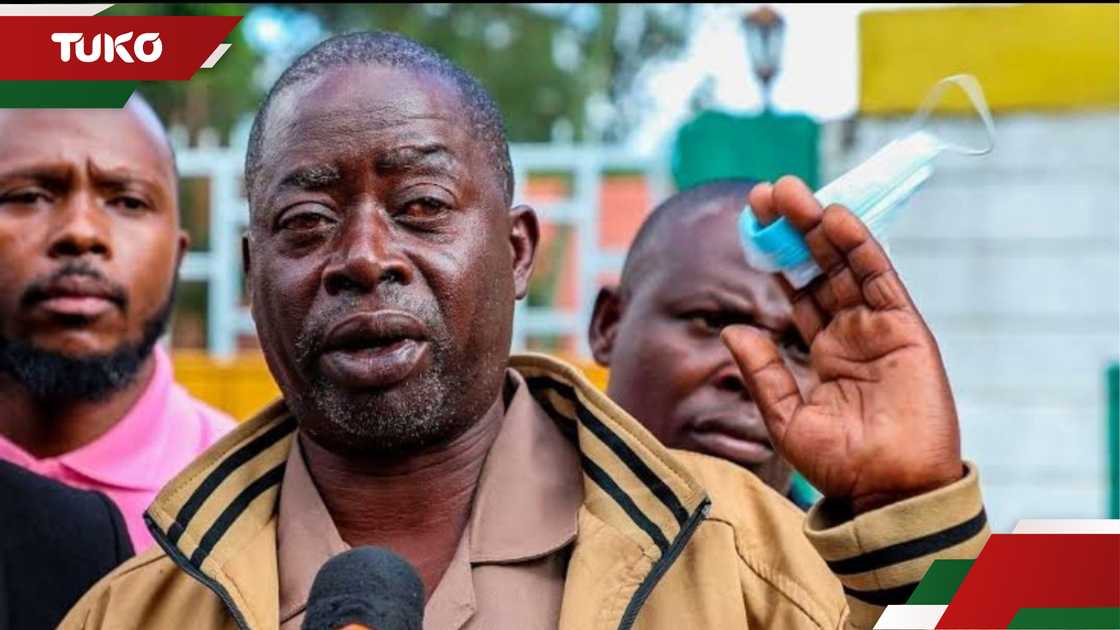
Raila Odinga Urges Leaders to Take Sides: “Now Is Not the Time for Neutrality” in Iran-Israel Conflict


  • Raila Odinga called on world leaders to break their silence and take a stand on the escalating conflict between Israel and Iran, warning of a looming global war

  • The ODM leader made the remarks while addressing residents of Jomvu in Mombasa county, where he criticised what he termed as silence in the face of grave injustice

  • He condemned Israeli attacks on Palestinians and recent strikes on Iran, urging the international community to push for a lasting solution through the creation of a sovereign Palestinian state


News.co.ke journalist Harry Ivan Mboto has over three years of experience reporting on politics and current affairs in Kenya

As tensions in the Middle East continued to rise, ODM leader Raila Odinga broke his silence and urged others to do the same, warning that humanity was staring at the real possibility of a third world war.

Speaking in Jomvu, Mombasa county, on Tuesday, June 24, Raila addressed the ongoing hostilities between Iran and Israel, which have recently drawn in the United States.

He urged global leaders to speak up and take clear positions, saying the world could not afford to remain neutral in such a critical moment.

“The world is burning. Bombs are being dropped. Iran and Israel are at war, and America has also joined. Yet leaders are shying away from speaking about it. This is a very important matter,” he stated.

What did Raila say about Israel, Iran war?

Raila expressed concern over what he described as acts of aggression by Israel, particularly in Gaza.

He said civilians, including women and children, had for years suffered bombardment, which he labelled crimes against humanity. According to him, recent events in the region had only worsened the situation.

“You have seen what is happening in Gaza. For a long time, women and children have been bombed and killed by Israel. Even now, many Palestinians are being killed. That is an act that must be condemned,” he said.

He added that Israel had carried out an unprovoked attack on Iran earlier in the day, followed by retaliatory strikes involving the United States.

He criticised these actions, saying they undermined peace and could ignite wider conflict.

“The US has also followed and bombed Iran. That is not right. We are telling the warmongers to stop, so that there can be peace,” Raila said.

To prevent further bloodshed, the veteran politician called for a long-term political solution to the Palestinian question.

He advocated for the establishment of a unified and free Palestinian state, arguing that this was the only sustainable path to lasting peace in the region.

Raila made it clear that his sentiments reflected both his personal beliefs and the position of the ODM party.

Did Trump broker peace between Israel and Iran?

In a related development reported by

News.co.ke

, US President Donald Trump announced that a ceasefire had been reached between Israel and Iran after nearly two weeks of escalating conflict.

His declaration came just hours after Iran launched missiles at a US military base in Qatar, a move that followed American strikes on Iran’s nuclear facilities. Trump claimed the truce was secured with Qatar’s help and described it as a diplomatic win.

The situation, however, remained tense. Iran’s leadership pushed back against claims of an official agreement, saying attacks would only stop if Israel ceased its military operations.

EUAN McCOLM: Civil Servants’ Benefits Spark Fury


  • Click here to visit the Scotland home page for the latest news and sport

The sense of entitlement is, at once, both infuriating and entirely unsurprising.

Pampered Scottish Government officials have grown accustomed, since the
Coronavirus
pandemic forced the temporary closure of offices, to working from home.

This emergency protocol was established for excellent reasons: in the months before a vaccine was created, Covid-19 presented a devastating threat to life. Of course it made sense for workers across the public and private sectors to carry out their duties far from the risk of infection.

But, thanks to the development of effective vaccines against the deadly virus, there is no longer any need for employees to stay away from their offices. Indeed, it is some years since such a measure was necessary, or even appropriate.

Yet, long after the threat from the virus was diminished, many Scottish Government civil servants continue to work from home. And many of them appear to have decided that’s the way things should stay.

For most Scots workers, going back to the office was not a matter of choice. It was, simply, a return to normality. But Scottish Government bureaucrats don’t reckon those rules apply to them.

Following an order that they should return to their offices for just two days a week, toys were ejected from prams across the country. How dare anyone expect these very important people to actually turn up at work?

An edict stating that 9,300 Scottish Government staff who have been allowed “hybrid” working arrangements since Covid should start spending two days a week in offices by autumn fuelled a backlash among mandarins, with some demanding special treatment simply for getting back behind their desks.


Using the government’s internal communications network, Saltire, staff bitterly complained about the hardship they would face if they had to actually turn up at the office to do the jobs for which they are so handsomely paid.

There were been demands for a swimming pool at the government’s Victoria Quay building to reopen, complaints that making staff come to work is unfair on their pets, and even questions over whether workers’ human rights are being breached by the order.

And, of course, there were calls for a pay rise, as if simply carrying out one’s contractual obligations represented a great personal sacrifice.

Senior managers within the Scottish Government want to cut back on the amount of time people work from home for the very good reason that they wish to boost productivity. It turns out that leaving entitled bureaucrats to their own devices is not good for efficiency.

I find it impossible to disagree with Conservative MSP Stephen Kerr’s view that those civil servants now complaining about the order to go to the office for a mere two days a week are “divorced from reality”.

Should you need persuading this is so, consider this comment from one civil servant: “Many have made big decisions based on balance — whether that be starting a family, getting a pet, getting rid of cars; down to things like starting a new fitness class, being able to take that longer lunchtime walk for their mental health or meet a friend after work because there is no commute. The prospect of that now being taken away is undoubtedly causing stress and anxiety.”

The wee lambs.

For workers across the private sector, refusal to come to work would be considered a matter of gross misconduct and instant dismissal would follow.

Click here to visit the Scotland home page for the latest news and sport

These same rules should apply to civil servants.

While the backlash from bureaucrats is enough to make the blood boil, who can say they find it surprising?

The culture of any organisation is set at the top and we have grown grimly accustomed to those who govern us acting as if they are entitled to special treatment.

We have watched as First Minister after First Minister has stood behind colleagues who – in the private sector – would have been sacked for incompetence. Why would a civil servant feel the need to perform their duties to any kind of acceptable standard when, for example, health secretary Neil Gray – of taking-a-limo-to-the-pub fame – remains in post? Why would a mandarin feel compelled to turn up to work when so many members of the Government act as if the standards by which the rest of us live and work are for the little people?

There would be something comical about highly-paid civil servants complaining about having to sit at their desks if Scotland’s public service were not in such a parlous state.

The SNP have made swingeing cuts to departmental budgets, stripping back services from social work to health to bin collections.

Meanwhile, ministers have retained a monomaniacal focus on the matter of Scottish independence. Not only have those in charge put their constitutional obsession before, for example, the need for a working NHS, they have diverted staff from vitally important work.

All of the hours spent planning for a second independence referendum that the Scottish Government has no right to run could – should – have been spent on the issues that truly matter to voters.

Amid the fear and anxiety created by the pandemic, there were some positives, not least the creation of a sense of community. As old social hierarchies crumbled, the feeling that we were all in it together was very real, indeed. The urge to play one’s part was strong and reassuringly widespread.

For most of us, life has got back to normal but for others, the need for friends and family to rally round endures.

There are those, of course, who live with the physical effects of Coronavirus long after infection. Others continue to pay a heavy financial cost.

The UK Government’s furlough scheme ensured wages were paid during the worst months of the pandemic but countless jobs lost – particularly in the retail and hospitality sectors – look unlikely ever to be replaced.

The “suffering” of a highly-paid mandarin, asked to come to work two days a week – without even having access to a swimming pool – doesn’t compare to that of someone whose career was destroyed by the pandemic, does it?

There is a case for the intervention of First Minister John Swinney, here.

I suggest he contacts those civil servants complaining about the return-to-the-office demand and makes them a generous offer: They can do as they are told or they can leave and find work more suited to their fragile temperaments.

There are plenty of hardworking Scots ready to step up.

Read more

Imo’s Debt Cut by Half Without Borrowing: Governor Uzodimma Announces

The Imo State Governor, Hope Uzodimma, has said his administration reduced the state’s debt profile by 60 percent, from N259bn in 2020 to N99bn, saying it is an indication of his government’s clear signal of financial management.

Uzodimma made the disclosure while addressing stakeholders at the State of Imo address at the State House of Assembly Owerri on Tuesday.

The governor who disclosed that he had no plans of borrowing money said the debt reduction was a clear signal of prudent financial management.

He disclosed that the internally generated revenue had increased by 500 per cent from ₦400 Million in 2020 to nearly ₦4 billion in 2025, noting that it had given the State the room to invest in infrastructure and services.

The governor said, “I am pleased to report that our administration has also reduced the state’s debt profile from ₦259 billion in 2020 to ₦99 billion in 2025.

“This reduction of 60% is a clear signal of our prudent financial management.

“In today’s Nigeria, where subnational governments are called to do more with less, Imo is showing that with vision, discipline, and reform, progress is possible”.

On the IGR, Uzodimma said “the impact is visible: our monthly Internally Generated Revenue (IGR) has grown from an average of ₦400 Million in 2020 to nearly ₦4 billion in 2025, an increase of about 500%.

” This performance gives us the fiscal breathing room to invest in infrastructure and services, even as federal allocations continue to look up”.

The governor disclosed that Imo State currently boasts of five higher institutions and that Tinubu had approved a take-off grant of over ₦30billion for the newly approved Federal University, Okigwe, saying it was an unprecedented milestone in the education journey of Imo State.

He said “It gives me great joy to announce that Imo State has a brand new federal university.

“Thanks to the magnanimity of President Bola Ahmed Tinubu, who not only signed the bill establishing the Federal University, Okigwe, into law but also approved a take-off grant of N39 billion.

“This is no small feat. With this development, Imo now proudly hosts five public universities, an unprecedented milestone in our educational journey.

“We give God all the glory.”

Uzodinma said the institutions are Imo State University, Owerri; K.O. Mbadiwe University, Ogboko; University of Agriculture and Environmental Sciences, Umuagwo; Imo State Polytechnic; and Ben Uwajumogu College of Education, Ihitte Uboma.

He disclosed that Imo State has a new transport chain known as the Imo Heartland Mass Transit Programme which will commence in the coming weeks aimed at “improving mobility, reducing travel costs, and creating jobs. Contracts have already been awarded, and contractors have been mobilised to the site.”

The transport scheme will have three bus terminals located at Egbu Road, Onitsha Road, and Naze Road, along with 256 bus stops strategically placed across the state, adding that the terminals or shelters are being constructed to world-class standards as part of a long-term plan to reshape urban and rural movement in Imo state.

Other achievements include the full automation of the civil service and its operations to stamp out fraud and ease service delivery, training and retraining of staff with modern-day work skills, prompt payment of salaries and pension, and uploading of backlog merited promotions as well as promotion of workers.

The governor said his administration had constructed more roads than all previous administrations since 1999 combined.

He said “Our commitment to infrastructure remains resolute.

“Today, Imo boasts of one of the most extensive and impactful road networks in Nigeria.

“Without sounding immodest, we have constructed more roads than all previous administrations since 1999, combined.

“To date, we have completed over 120 roads across the state.

“In the past 18 months alone, we delivered 37 brand new roads, an iconic edifice, the International Conference Center, and a befitting Government Housing Annex Orlu.

“We also have the Assumpta Flyover and the new Concorde-Hilton Hotel as landmark legacy projects”.

Some of the new roads listed were Toronto – Orji Road, Naze-Ogbosisi Road, Orlu – Nkume-Umuowa Road, Oru West LGA Road, Mgbidi-Omuma-Okporo Road, Amiri- Omuma Road, Ihialla -St Joseph_Eziachi Road, Okwudor-Awo omamma Road, Toronto-Ekemmegbuoha Road, Owerri-Mbaise-Umuahia road, IMSUTH road Orlu, Alaba International Market, Orlu–Akokwa–Uga Road (19.2km), and several others.

Other achievements listed by Uzodimma include health, sports, women’s affairs and social welfare, digital economy and e-governance, light up Imo project (electricity), housing, restoration of lands illegally diverted, amongst others.

The governor assured that Imo is safe as his administration had clamped down on criminals and those instigated by politicians, adding that with the support of the Federal Government and security agencies, the state had reclaimed its place as the hospitality capital in the southeast.

Uzodimma said,”As the Chief Security Officer of the state, I have never taken this responsibility lightly.

“You are all aware of the troubling period when our state was targeted by politically motivated insecurity, marked by banditry, violence, and lawlessness.

“But we did not fold our arms. We acted, resolutely and collaboratively.

“Through sustained partnership with the federal government and security agencies, we have steadily reclaimed the peace of Imo.

“I am pleased to report that the state capital, Owerri, has hosted several national and international conferences in the past year, without any incidents.

“That is no coincidence; rather it is the fruit of deliberate effort. Imo is returning to its rightful place as the hospitality capital of the South East.”

He, however, appealed to instigators of violence to stop, saying no personal ambition is worth the blood of the people, as he called on them to join hands with his government in building, not destroying the state.

Provided by SyndiGate Media Inc. (
Syndigate.info
).

Junet Mohammed: Loyalty Over Betrayal? Raila Odinga Stands With the People, Then and Now

The lead story in the June 23, 2025, edition of

The


Standard

newspaper was a gross misrepresentation of facts, a calculated distortion of history in motion, and a flagrant act of political propaganda masquerading as journalism.

It claims that Raila Amolo Odinga, the indefatigable champion of democracy and social justice, betrayed the Gen Z-led anti-Finance Bill 2024 uprising. The paper could not be further from the truth.


Indeed, if there is any individual who has borne the


brunt


of resisting autocracy and economic oppression in Kenya, it is Raila Odinga.


He has spent decades in the trenches—detained without trial, tortured, vilified, exiled—so that


the people of


Kenya could enjoy the very liberties that


he is proud that


Gen Z is now exercising with admirable boldness.


To attempt to paint him as a betrayer of a movement rooted in justice, accountability, and economic freedom is both ahistorical and dishonest.


Let us set the record straight.


First, it must be acknowledged that the Gen Z


protests


did not emerge in a vacuum. It arose from a continuum of Kenyan struggles against neoliberal oppression,


punitive


state policies, and broken promises.


In June and July of 2023, long before many of today’s commentators even noticed the impact of state fiscal overreach, Raila Odinga led protests against the Finance Bill 2023.


That Bill aimed to raise taxes on ordinary Kenyans—on housing, digital services, fuel, and incomes—


ostensibly for accelerated


development, but in reality


to plug the holes left by


decades of


elite mismanagement and corruption.


Those protests saw the deaths of dozens of young Kenyans, many of whom were shot in cold blood while exercising their constitutional right to assemble


and picket


. Odinga did not abandon them.


He walked side by side with them at great personal risk in the process, surviving assassination attempts in broad daylight and full view of cameras.


He mourned with


Kenyans who had lost their dear ones


. He condemned the killings.


He called for justice. He stood with them—while those now crying betrayal were either complicit in silence or distracted by political expediency.


Fast forward to May 2024. Once again, Odinga led Azimio la Umoja One Kenya Coalition in convening to analyse the newly proposed Finance Bill 2024—this time even more draconian than its predecessor.


The coalition invited tax experts, economists, civil society actors, and members of Parliament to the Sarova Stanley Hotel. The result was a comprehensive analysis of how the Bill would escalate economic suffering and choke the country’s productive sectors.


Slides from that Azimio PG presentation were disseminated widely online. These became key tools in the digital mobilisation led by Gen Z activists—tools that clarified, educated, and armed citizens with evidence.


Gen Z did not spring from nowhere; it took up a baton passed on by the broader Kenyan movement, including Odinga’s own efforts. To claim betrayal, therefore, is to deny this intergenerational continuity and mutual reinforcement. It is a politically expedient rewriting of the facts.


Unlike some establishment figures who met the Gen Z protests with disdain, Raila Odinga lauded the youth. He did not attempt to hijack their struggle.


He did not seek to impose an Azimio stamp on it. Instead, he respected its organic nature and celebrated its unprecedented success. On June 2


5


, 2024, when protesters overran Parliament and the Judiciary


and also


forc


ed


a dissolution of the cabinet, it was not lost on him or any serious political analyst that Kenya had entered uncharted territory.


The youth had achieved in weeks what conventional political movements had failed to do in years.


At that point, the conversation shifted. From opposing a singular Finance Bill, the protests now called for the resignation of President Ruto. “Ruto Must Go” was not a policy demand.


It was a political ultimatum. With the three arms of government discredited and overrun


, Kenya stood at the


horns of a political dilemma


.


Faced with this reality, any responsible leader must assess possible outcomes. As a party, Azimio outlined five possible scenarios:


Scenario one, r


esignation of President Ruto and succession by the Deputy—a constitutional option.


Was this the alternative the protestors were suing for?


Second scenario, a m


ilitary intervention—akin to developments in Sudan, Egypt, or Tunisia


after the Arab Spring “revolutions


.


Scenario three, a


palace coup, which history shows can usher in prolonged instability.


Scenario four, o


utright anarchy—with balkanized militia rule, civil strife, and state collapse.


And finally, scenario five. The exercise of p


opular sovereignty through Article 1 of the Constitution—a national dialogue and citizen-led resolution.


Given the foregoing,


Odinga championed the fifth option. He called for a national conversation, not to dilute the Gen Z momentum, but to anchor it in constitutional legitimacy


and not let their gallant efforts go to waste


. He did not betray the movement. He sought to safeguard it from being hijacked by chaos and reactionary forces.


Odinga’s decision to take the high road, to insist on dialogue and national coherence,


cannot be termed a


betrayal,


as

The Standard’s

propaganda seeks to plant in the psyche of its readership


. It is leadership.


True, the call for a national dialogue was rejected in the heat of protest. That is the nature of an uprising—radical, emotional, and unstructured. But it is the duty of elder statesmen to offer structure and a path forward, not to cheer as the country teeters over the edge.


To argue, as The Standard does, that Odinga capitulated or colluded is to ignore history and distort facts. By July 2024, street demonstrations had already subsided. The momentum had shifted from mass action to elite reaction.


Those who now claim that Odinga betrayed Gen Z are either willfully blind or politically dishonest. They ignore that it was Odinga, more than


m


any other leader


s


, who pushed for


the enactment of the new Constitution


that enshrined Article 1—the sovereignty of the people.


They forget that it was Odinga who warned about the dangers of violent state responses


to peaceful protests


, about the


rampant abductions


, and about the fragility of our hard-won democratic gains.


It would be remiss not to interrogate

The Standard

itself. The newspaper’s recent editorial line raises questions about its motivations. Owned and managed by figures tied to past regimes and elite economic interests,

The Standard

has a documented history of silence during state-sponsored violence, assassinations, and repression.


From the Moi era


detentions without trial, official torture at Nyayo House and assassinations


to the


recent


interregnum,


this media house


has often aligned itself with

status quo

forces.


The Monday lead story


reeks of the same betrayal it seeks to project. It betrays


honest


journalism. It betrays objectivity. It betrays the Kenyan people’s desire for truthful, constructive engagement.


This is not the first time this media house has attempted to discredit


Raila


Odinga. From the 1980s when it ridiculed detainees, to the 2000s when it whitewashed stolen elections,

The Standard

has too often stood on the wrong side of history.


Let us be clear. Kenya is in the midst of a profound transformation. Gen Z has done the country proud. They have reclaimed civic agency and shaken the foundations of impunity. But their struggle is not detached from the broader freedom movement. It is part of the same arc of justice that leaders like Raila Odinga have pursued for decades.


To attempt to split that arc, to pit the present against the past, is to aid the oppressors. It is to do the


devil’


s work for it. We must reject false dichotomies and manufactured betrayals. The real betrayal would be to let the movement descend into anarchy. The real betrayal would be to let state violence return unchecked.


The real betrayal would be to abandon the dream of a united, just and democratic Kenya.


And that’s what the Memorandum of Understanding signed on March 7, 2025 to guard against.


Raila Odinga did not betray the people. He has always stood with the people. He stands with them still.


Let

The Standard

look for traitors elsewhere.

Provided by SyndiGate Media Inc. (
Syndigate.info
).

Critical Analysis: Bawumia’s Case for Cedi Appreciation in 2025


By. Bernard TETTEH-DUMANYA (Dr)

In a recent public commentary, former Vice President Dr. Mahamudu Bawumia attributed the appreciation of the Ghanaian cedi in 2025 to policies implemented under the previous New Patriotic Party (NPP) administration.

He specifically highlighted the gold-for-oil initiative, the Bank of Ghana’s gold reserve accumulation, the global weakening of the U.S. dollar, and restrained public expenditure by the current NDC government as key drivers of the cedi’s resurgence.

While these remarks are positioned to credit past NPP policy interventions for current macroeconomic stability, a closer examination reveals several economic and logical inconsistencies.

One of the most striking contradictions lies in Dr. Bawumia’s shifting stance on the relationship between macroeconomic fundamentals and exchange rate dynamics. In 2014, while in opposition, he famously asserted that “if the fundamentals are weak, the exchange rate will expose you.” This statement became a cornerstone of his critique against the then NDC government during periods of cedi depreciation.

However, during his tenure as Vice President and Chair of the “solid” Economic Management Team, Dr. Bawumia adopted a markedly different position.

When the cedi came under pressure, he contended that currency depreciation does not necessarily signal weak fundamentals, often attributing the depreciation to external shocks beyond the government’s control.

This apparent inconsistency reflects a troubling tendency toward political opportunism rather than a principled, evidence-based approach to economic policy.

If one holds that weak fundamentals inherently lead to exchange rate vulnerabilities, then it logically follows that the cedi’s significant depreciation during his time in office should equally be viewed as a symptom of underlying structural weaknesses, not merely the result of external pressures.

Such contradictory narratives undermine public confidence and raise important questions about the coherence and integrity of Dr. Bawumia’s knowledge of Ghana’s economic discourse.

In 2025, Dr. Mahamudu Bawumia asserted that the Ghanaian cedi’s appreciation is primarily a result of the gold-for-oil policy, and the gold accumulation strategy implemented during the previous New Patriotic Party (NPP) administration.

While it is economically sound to recognize the importance of building foreign exchange reserves in safeguarding a currency against volatility, Dr. Bawumia’s attribution suffers from a

post hoc fallacy;

mistaking chronological succession for causation.

From an empirical standpoint, foreign reserves support currency stability most effectively when aligned with prudent and current fiscal and monetary policies.

The appreciation of a currency, particularly in open market economies, is more often a forward-looking signal reflecting investor confidence, market sentiment, and the credibility of ongoing economic management.

It is therefore logically inconsistent to credit 2025 exchange rate movements to policy decisions whose implementation had either concluded or lost momentum years earlier.

Although the Bank of Ghana’s gold purchases may have helped mitigate the balance-of-payments crisis in 2022–2023, the assertion that these past actions are the primary drivers of the cedi’s 2025 appreciation overlooks the complex and dynamic nature of currency markets.

Current macroeconomic outcomes are largely shaped by present-day governance, fiscal discipline, and credible monetary policy factors which investors actively monitor. Attributing ongoing developments to legacy policies, without acknowledging the influence of the current administration’s decisions, discounts the real and measurable efforts being made today by the NDC government.

More critically, Dr. Bawumia’s position reflects a troubling unwillingness to recognize the contributions of others. His dismissal of the current government’s role in fostering macroeconomic stability appears politically motivated and lacks analytical fairness.

One must ask: if the cedi were depreciating under the current administration, would he still attribute that to past policies? It is unlikely. This selective narrative implies that only positive developments stem from his tenure, while all negative trends are the fault of others’ a stance that is neither objective nor intellectually consistent.

It is important to acknowledge that while reserve accumulation is essential for long-term resilience, the cedi’s current appreciation is occurring under a new administration and is likely influenced by factors such as renewed investor confidence, ongoing fiscal consolidation, enhanced policy credibility under the IMF program, and improved monetary-fiscal coordination.

Indeed, the Bank of Ghana’s own Monetary Policy Report has noted that short-term exchange rate movements are more directly impacted by real-time fiscal discipline, external inflows, and policy credibilityrather than reserve buffers alone.

Dr. Bawumia has challenged the current administration to identify a single policy responsible for the recent appreciation of the cedi, attributing current macroeconomic improvements to the legacy of the previous NPP government.

However, this view overlooks the complexity of currency markets, which are influenced by ongoing fiscal policies, market expectations, and global trends. \xa0His argument also references the weakening of the U.S. dollar and compares Ghana to Zambia. While a softer dollar affects emerging markets broadly, it does not fully explain the cedi’s performance.

Ghana’s currency has historically been more volatile due to domestic factors like inflation, debt servicing, and trade imbalances.

Unlike Zambia, Ghana has not benefited equally from commodity exports or debt restructuring. Thus, the cedi’s gains are more credibly linked to internal policy credibility than external trends alone. Dr. Bawumia’s explanations also rely heavily on selective comparisons.

The Dollar Index (DXY) has seen cyclical changes, not a sustained decline, and other regional currencies like Nigeria’s naira have not mirrored the cedi’s performance. This suggests internal policy actions are more decisive.

Overemphasizing external factors ignores Ghana’s specific economic realities. It is dangerous for Dr Bawumia to continuously oversimplify such economic dynamics undermines public discourse and no wonder in 2017, he claims of having “arrested the cedi and given the keys to the IGP” serves as a caution against political sloganeering if he indeed wants to become president in Ghana.

Dr. Bawumia also argues that limited spending by the current administration—particularly its failure to pay Independent Power Producers (IPPs) and contractors has eased pressure on the cedi by reducing demand for foreign exchange.

While this may be true in the short run, it is a

dangerously flawed justification

for currency appreciation. Thus, claiming reduced expenditure as a virtue oversimplifies the relationship between public spending and currency health.

In summary, Dr. Bawumia’s attribution of the cedi’s recent appreciation to policies of the past government reflects a mix of

economic misinterpretation and political deflection


.

While some foundational efforts such as gold reserve accumulation may have contributed to earlier stability, the sustained appreciation of the cedi in 2025 is more likely the result of

ongoing fiscal discipline


,


IMF-backed reforms


,

and

reduced speculation due to increased policy credibility


.

Furthermore, relying on reduced spending or global dollar trends without acknowledging Ghana’s internal structural issues reveals a

narrow reading of complex macroeconomic dynamics

. For a more productive national economic discourse, future commentary must center on

evidence-based policy impact

, not retrospective credit-claiming.


>>>the writer


is a distinguished Ghanaian financial economist and consultant with nearly three decades of experience spanning academia, corporate finance, and agribusiness. He has held pivotal roles at institutions such as UBA Ghana, SIC Financial Services, Empretec Ghana, and the Swiss International Finance Group, reflecting his profound understanding of global finance. Renowned for pioneering efforts in risk management, compliance, and corporate strategy, Dr. Tetteh-Dumanya has significantly contributed to Ghana’s financial landscape.


His expertise encompasses venture capital, business and financial reengineering, and fundraising, playing a crucial role in the growth and development of numerous entities.


Driven by a commitment to capacity development, he has provided consultancy services to a diverse array of local and multinational organizations, including GIZ, AGRA, SNV, DANIDA, and USAID.


As the CEO of SGL Royal Kapita, he has introduced innovative investment services targeting Ghana’s agriculture sector, aiming to support farmers and agribusinesses in achieving financial stability and growth.


Beyond his professional endeavors, Dr. Tetteh-Dumanya is an influential columnist, offering incisive analyses on Ghana’s economic policies and advocating for strategic financial mechanisms to enhance the nation’s economic sovereignty. For inquiries, Dr.\xa0 Tetteh-Dumanya can be reached at:
mafioba@yahoo.com

Provided by SyndiGate Media Inc. (
Syndigate.info
).

Ruto’s $20K Donation to Albert Ojwang’s Family Sparks Controversy Amid Money Theft Claims


  • Rumours have been circulating on social media accusing the president of not fulfilling his KSh 2 million promise

  • However, according to new information, the family did receive the money in cash but has never touched it

  • The news has not delighted many Kenyans who still believe Mzee Meshack Opiyo should have turned down the donation

Albert Ojwang’s family has denied reports that they are yer to receive the KSh 2 million donation from President Willaim Ruto.

A few days ago, information went rife online, claiming that Ojwang’s family were yet to receive Ruto’s donation, with claims that Meshack Opiyo, Ojwang’s dad, urged the president to remember his pledge.

Ojwang’s uncle defends President Ruto

However, speaking to journalist on Tuesday, Ojwang’s uncle, Kenneth Ouma, denied the claims, noting the family did receive the amout.

Ouma said that the money was delivered in cash during the day they were visited by Homabay Governor Gladys Wanga, who came with the amount.

“It is in public domain that the president gave KSh 2 million. He sent (William Ruto) Hon. Gladys Wanga, who brought the money to the family,” he said.

Ouma noted that the whole amount was sent to the bank account and no one, including Meshack, touched even a cent of it.

He added that they called the Equity bank manager in the Oyugis branch, gave him the cash, and it is safe.

“The day it was brought, is the day it was sent to the official family bank account. Infact, I want to make it clear that the old man did not even touch a leaf of a note. The entire money as it was delivered by Hon Wanga, we called the Equiy bank manager Oyugis at home, all the money was given in cash and given to the bank manger, who I gave the account and can confirm to you that money is safe,” he said.


Just like from early reactions, the comment section did not have nice words to say about the family acceopting the money, which many saw as betrayal.

Here are some of the reactions:

irenemuendon said:

“The moment he thanked Ruto it was finished.”

mwambatalo_sambataba7_official said:

“Shauri yao…we went on the streets and he thanked Ruto rygym nkt.”

lakergal_raviellah said:

“So wako sawa hata kama walikua swindled they will be fine.”

kinjulius3 said:

“Money was given in cash na bank inakam aje ndani.”

stivohmaina said:

“he can never keep a promise.”

ictorkhodis claimed:

“Albert azikwe this people now are in business yet the guy will not get justice,watu wao wameshiba sasa.”

Ojwang’s family denies receiving KSh 10 million in donations

Earlier, the family of Albert Ojwang denied claims they received KSh 10 million in total donations through M-Pesa.

This was after community mobiliser Eric Omondi claimed that from his estimates, the family received about KSh 10 million.

According to Kenneth Ouma, the amount was about KSh 2.6 million and said what Eric did was assumed the total amount.

He noted that the amount could be around KSh 5.6 million in total when you add what the other politicians donated.

Behind Closed Doors: The Quiet Meetings Steering Governance Transformation


How strategic engagements with national institutions are laying the foundation for Africa’s next era of compliance


By


Tiffany A. ARCHER


, Esq.

At a pivotal moment for governance and risk management in Ghana, a series of high-level institutional engagements is setting the tone—not only for this week’s Executive Forum on Strategic Compliance™, but for the future of ethical leadership and institutional resilience across the region.

In the days leading up to the Forum, three of Ghana’s most respected institutions—the Institute of Directors–Ghana (IoD-Gh), the Ghana Bar Association, and the State Interests and Governance Authority (SIGA)—are holding closed-door sessions focused on strategic alignment, capacity building, and shared governance priorities.

These are not ceremonial meetings; they are working discussions rooted in national interest and a vision for stronger, values-driven institutions.


Institutional leadership at the forefront

At the invitation of these institutions, Tiffany A. Archer, Esq.—Founder of the Forum and President of Eunomia Risk Advisory, and a lecturer in law—is participating in the meetings as a knowledge partner, representing Eunomia’s commitment to strengthening governance capacity across high-growth markets.

A former Chief Compliance Officer and Fortune 200 legal executive with nearly two decades of global experience, Archer has advised multinational companies through U.S. DOJ and SEC investigations, overseen cross-border compliance strategies across Africa, Europe, and Latin America for multinational companies operating under U.S. and international regulatory regimes, and guided global companies through complex legal challenges, including court-appointed oversight programs—where an external expert monitors a company’s compliance with laws and ethical standards after major violations. Her expertise sits at the intersection of behavioral science, regulatory strategy, and ethical leadership.

Eunomia’s mission is to equip high-growth markets with the strategic insight and institutional tools needed to embed compliance, elevate governance, and manage risk with foresight.

Its work in Ghana reflects that mission in action—engaging with national institutions to advance African-led solutions to complex governance challenges and foster strategic clarity and cultural awareness in a rapidly evolving landscape.

  • At IoD-Gh, President Angela Carmen Appiah and CEO Dr. Alfred Braimah are exploring how board governance practices can be deepened to equip Ghana’s directors with the foresight needed to govern amid economic shifts, regulatory evolution, and digital transformation.
  • At SIGA, the Director-General and CEO, Professor Michael Kpessa-Whyte, along with Head of Governance, Risk and Compliance, Eric Albert Opoku, are leading a discussion on embedding performance-based governance into the oversight of state-owned enterprises—ensuring that SOEs are not just compliant, but positioned to deliver sustained public value.
  • At the Ghana Bar Association, President Efua Ghartey is facilitating dialogue on the legal profession’s role in shaping a culture of preventive compliance, advancing transparency and justice, and helping to close implementation gaps across sectors.

These engagements underscore a broader national imperative: that strong institutions and values-driven governance are not only good practice—they are essential building blocks for Ghana’s long-term development, investment confidence, and regional leadership.


Supporting capacity through knowledge

To support these efforts, Eunomia Risk Advisory is donating copies of Professor Douglas Boateng’s book, Practical Perspectives on Boardroom Governance, to each of the institutions.

Recently approved by the National Council for Curriculum and Assessment (NaCCA) as part of Ghana’s national education framework, the book has been praised for its clarity, accessibility, and real-world relevance.

It reinforces the critical role governance plays in national development—and offers practical tools to strengthen leadership and institutional performance across sectors.

Professor Boateng, one of Africa’s foremost authorities on corporate and supply chain governance, will also deliver the keynote address at the Forum. His work provides both policy-level frameworks and operational tools to enable institutions to govern with accountability, foresight, and long-term impact.


Strategic compliance as a development lever

As Ghana navigates an increasingly complex governance landscape—from regulatory shifts and ESG demands to digital risk and sanctions enforcement—strategic compliance is no longer a technical obligation. It is a lever for national progress.

The meetings this week are addressing:

  • How to expand board oversight into emerging non-financial risks, including ethics, culture, and cyber resilience;
  • How to institutionalize accountability within public enterprises as part of Ghana’s broader economic transformation;
  • How to elevate the legal profession as a force for transparency, enforcement integrity, and ethical growth.

These discussions reflect Eunomia Risk Advisory’s to helping institutions across the region turn policy into practice and aspiration into implementation—work that is now beginning in Ghana through these foundational engagements.

By grounding these conversations in Ghana’s institutional realities, these engagements reinforce a principle too often overlooked: that meaningful compliance begins within, and is sustained through local leadership and ownership.


Laying the groundwork for embedded change

While the Executive Forum on Strategic Compliance™—to be held on 26 June at the Kempinski Hotel—will bring together regional voices to explore AI governance, sanctions, financial crime, and behavioral science, these preliminary engagements ensure the Forum is not simply a convening—but a continuation of collaborative work already in motion. With limited seats remaining, registration is still open at
www.executiveforumcompliance.com
for those who wish to be part of this timely and impactful conversation.


A Ghanaian-led vision for ethical leadership

As the continent works toward the goals of Agenda 2063, Ghana’s leading institutions are demonstrating that good governance is not a foreign requirement—it is a national imperative, and a sovereign strength.

In the words of one senior leader involved in this week’s engagements, “Strategic compliance is not just about meeting requirements. It’s about building the kind of institutions that will carry this country forward.” Through these dialogues, Ghana is charting a path where ethics, risk intelligence, and institutional credibility form the foundation of competitive advantage—not only for today’s governance landscape, but for generations to come.

We hope to see you there.


>>>the writer is President and Founder of Eunomia Risk Advisor Inc, a specialized advisory firm advancing ethical governance, institutional resilience, and risk foresight across jurisdictions. She is also the Co-Chair of the Executive Forum on Strategic Compliance.

Provided by SyndiGate Media Inc. (
Syndigate.info
).
2027 Warning: Atiku-led ADA Poses Threat, Group Alerts Nigerians

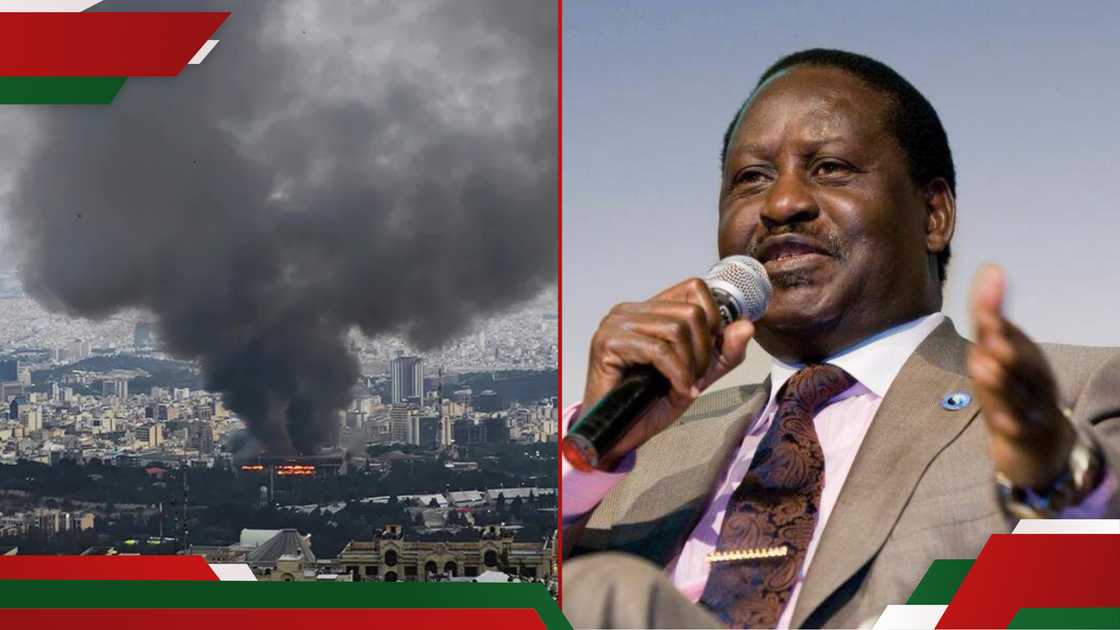
The Oduwa Peoples Assembly (OPA) has issued a strong warning to Nigerians over the emergence of the All Democratic Alliance (ADA), a new political coalition reportedly spearheaded by former Vice President Atiku Abubakar.

In a statement by the group’s leader, Rechard Oltunji Kayode, expressed grave concern over the composition of the coalition, alleging that its leadership is made up of individuals whose records in public service have been tainted by allegations of corruption, poor governance, and self-interest.

Kayode said: “The leadership of the ADA is comprised of individuals who have long been associated with political opportunism, a trait that has severely undermined the trust of the Nigerian people in their leadership.

“Key figures such as Nasir El-Rufai and Rotimi Amaechi, among others, have been discredited through their actions and policies during their tenures in office. Their records reveal a troubling pattern of governance characterized by self-interest, corruption, and a blatant disregard for the welfare of the Nigerian populace.

“Nasir El-Rufai, the former Governor of Kaduna State, is emblematic of the kind of leadership that has brought our nation to its knees. His administration was marked by controversial policies and a lack of transparency, which left many citizens questioning his commitment to democratic principles.

“His involvement in the ADA raises serious concerns about the coalition’s intentions, as he has repeatedly demonstrated a willingness to prioritize political gain over the needs of the people he was elected to serve.

“Similarly, Rotimi Amaechi, the former Governor of Rivers State and Minister of Transportation, has a history of political maneuvering that has often favored his personal ambitions rather than the collective good. His leadership style has been criticized for fostering division and conflict rather than unity and progress.

“The OPA believes that the inclusion of such figures in the ADA is indicative of a coalition that is more interested in consolidating power than in addressing the pressing issues facing our nation.

“The desperation exhibited by the leadership of the ADA is palpable. In a bid to regain relevance and influence, these political opportunists are attempting to repackage themselves under a new banner, hoping that the electorate will forget their past misdeeds.

“However, the Nigerian people are not easily fooled. The electorate is increasingly aware of the need for genuine leadership that prioritizes accountability, integrity, and the common good.”

He urged Nigerians to resist being “swayed by the superficial allure” of the coalition and instead demand genuine leadership anchored on accountability, integrity, and national development.

He added, “The OPA urges all Nigerians to remain vigilant and critically assess the motives behind the formation of the All Democratic Alliance. This coalition should not be viewed as a beacon of hope for our democracy but rather as a continuation of the same old political games that have plagued our nation for decades.

“The ADA’s leadership is not equipped to offer the transformative change that Nigeria desperately needs; instead, it represents a regression to the very practices that have stifled our progress.

“It is our duty to demand better from our leaders. We must hold them accountable for their past actions and challenge the narratives that seek to mislead us. The Oduwa People’s Assembly calls upon all Nigerians to be discerning in their political choices and to support movements and individuals who demonstrate a true commitment to the principles of democracy, justice, and national development.

“The Oduwa People’s Assembly stands firm in its warning against the All Democratic Alliance. Let us not be swayed by the superficial allure of a new political coalition led by discredited figures. Instead, let us strive for a future where our leaders are genuinely invested in the welfare of our nation and its people.”

Provided by SyndiGate Media Inc. (
Syndigate.info
).
Power, Education, and Transformation in Africa: An International Perspective

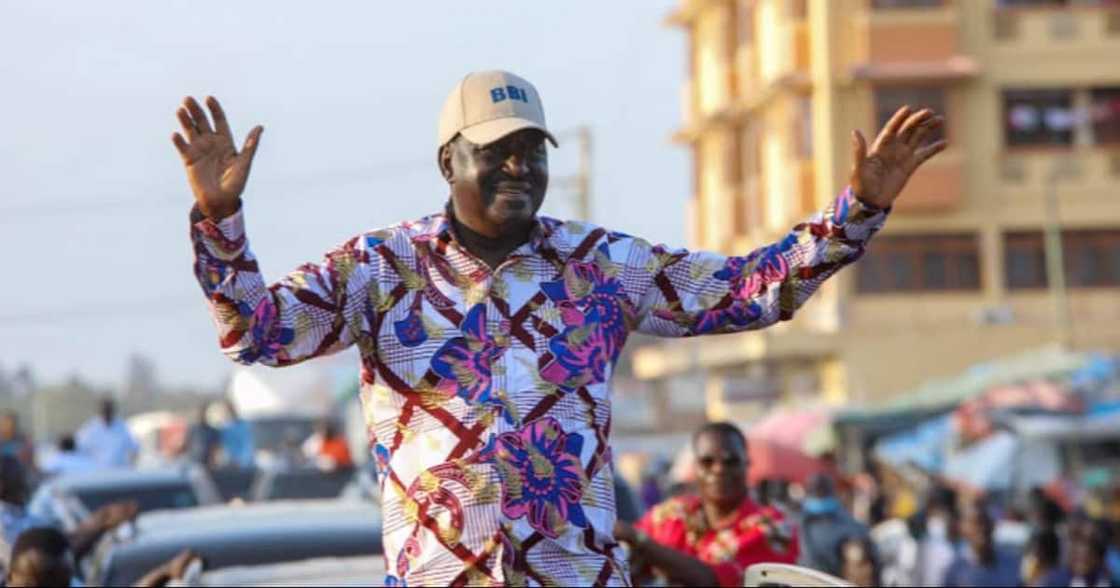
It is a privilege to have received the opportunity to give the first distinguished lecture at Karl Kumm University at Vom under the leadership of Professor Audu Nanven Gambo. It was such an exciting moment for the entire student body and the entire management. Thank you.

The modern debate on the evolution of Africa has revealed how closely power, education, and social change interact to both spur on and impede growth. The historical confrontations with colonization, state-building, and political power of the continent have shaped the function of education as a vehicle for societal reform. These challenges have affected our view of and use of schooling. The complex link between education and power has had a major influence on the course of Africa’s development, all things considered. Education has been used not only for personal development but also for maintaining the status quo and exerting population control during most of Africa’s history, hence preserving the integrity of the continent. It has not only helped to create power in post-colonial settings but also challenged accepted systems of governance, therefore generating ongoing conflict between what education should be and how it may be used to propel change.

Thus, one must look at the three fundamental types of power—political, economic, and social—to grasp this dynamic. Every one of these kinds of power is very important in the development of African educational systems. The ways in which various types of power are mixed affect the people who have access to education, the features of that education, and the results generated for society at large. Political power in many African nations determines the distribution of resources, educational policy, and curriculum, therefore influencing the course of education. Economic power affects who can afford good education in the meantime, which in turn affects the job market, social mobility, and national economic growth. Social power shapes educational materials; it is usually expressed via cultural and traditional values. Power supports or questions the prevalent societal norms and roles.

While trying to understand the historical link between power and education in Africa, the legacy of colonialism is most certainly the most crucial factor to consider. Throughout their period of colonial rule, European countries established educational institutions intended to serve the economic interests of their countries. Education aimed to achieve this. This legacy of exclusion and control has affected African education for decades, leaving many African nations with disjointed educational institutions disconnected from their social reality and economic needs.

After gaining their freedom, African leaders worked to change their educational institutions such that they would be in accordance with national development goals and that education would be available to a greater spectrum of individuals. Still, the process of educational reform was made more challenging by the presence of relics of colonial education institutions in addition to political unrest, inadequate funding, and the restrictions of economic modernism. Many times, the political elite—who had attended colonial institutions—kept their control over decision-making even after their schooling. This guaranteed that rather than allowing significant change, education would always be a tool for maintaining power. Consequently, many African nations’ educational systems kept pushing inequality, so limiting access to education for underprivileged groups—especially women, rural people, and ethnic minorities.

Notwithstanding the challenges that have been thrown forward, education has remained a major transforming agent for Africa. Throughout history, educated elites have driven political reform, social fairness, and independence. Most African independence movement intellectuals were educated in Western countries, but they used their knowledge to question colonial authority and demand African autonomy. Education empowered people to strive for change and assess their political and social conditions in this atmosphere. Education also turned into a tool for personal emancipation. After Africa acquired its freedom, education has kept its importance, especially as a means of supporting democracy, challenging long-standing political regimes, and advancing social movements.

Another crucial role that education plays in deciding the course of Africa is in fostering economic development. In countries where education systems are more easily available and inclusive of a greater spectrum of individuals, there is a higher likelihood for upward social mobility and economic growth. For the educational systems situated in Africa, the notable rise in the number of young people presents both possibilities and challenges. Africa could rise globally in technical innovation, entrepreneurship, and creative ability. This is so because the continent boasts a huge population consisting of youthful people. Still, this promise can only be fulfilled if African countries invest in their educational institutions and guarantee that young people have the tools they need to flourish in an always-changing environment. To ensure that education can meet the demands of a global economy that calls for intellectual flexibility, creativity, and invention, this calls not only for raising the number of persons who have access to it but also for improving the quality of it.

Given Africa’s entry into the twenty-first century, the value of education in deciding the political and economic course of the continent is rising at an unheard-of rate. Education is a vehicle for the overall change of society as well as a tool for personal development. Possible results of this are the empowerment of people, the challenging of unfair systems, and the building of a future that is more equal and sustainable.

Colonialism shaped the intellectual and cultural fabric of civilizations under colonial rule as well as land and resource acquisition. By means of education, colonial authorities sought to impose mental control over the Africans. This was carried out to make sure the African people followed the policies endorsing European supremacy. Through the educational system then in use during colonial times, a class of enslaved people meant to serve the colonial administration and help the exploitation of African resources was supposed to be produced.

The basis upon which the colonial education system in Africa was first developed was control. By imposing their educational models on African people, the European colonists undermined local knowledge systems, languages, and cultural practices. The main goal of this project was to produce a small, educated elite who would act as middlemen between the colonial powers and the more general African people. Conversely, this system was not meant to make the lives of most Africans better. Most of the populace was either compelled to follow a curriculum that failed to sufficiently equip them with the required skills and knowledge or was not allowed to engage in official education. This led to the building of exclusive, divorced from the demands of African civilization’s educational institutions throughout colonial administration.

Many African nations still today benefit from this colonial era educational approach that was devised. The objective of post-colonial Africa has been to transform these inherited systems into something that captures the needs, values, and aspirations of African civilizations. Even though many African nations have modernized their educational institutions, colonialism still shapes education. Colonial schools stressed Western ideas, languages, and knowledge over African cultures, languages, and worldviews. This legacy has thus led to the creation of an educational system that regularly values Western knowledge more than indigenous knowledge. Many African people have thus grown to feel inferior and culturally alienated.

One of the traits of colonial education that has kept its impact throughout time is the predominance of foreign languages in African schools. The main languages of instruction were those of the colonial powers—English, French, Portuguese, and others—which drove the indigenous African languages to the background. The educated elite, who speak these languages fluently, and most people who might not have access to top-notch education in their home tongue, live in different spheres. The adoption of foreign languages in education has produced this separation that has had a long-lasting effect on African civilizations. This linguistic barrier has preserved residents’ incapacity to completely participate in political, social, and economic life as well as their inability to have equal access to educational possibilities. Another element influencing the loss of cultural identity is the belief that indigenous languages are less valuable or less able to express complex ideas in contrast to European languages.

Another result of colonial education passed down to the next generations is the ongoing focus on academic knowledge at the price of practical and technical skills. During colonial control, education was meant to produce a limited number of people who could satisfy colonial government or administration criteria. This system overlooked the instruction of practical skills, which were vital for the mass of the population, while it gave Western knowledge—including European history, literature, and mathematics—top priority. While vocational and technical education is still underdeveloped in many African nations today, academic education—especially in the humanities and sciences—remains preferred in many of them. This has resulted in a mismatch between the skills taught in schools and the needs of the labor market, therefore impeding economic progress and worsening the unemployment rate among young people.

The educational system during the colonial era bolstered the economic institutions supporting colonial exploitation as well. African students received the education required to function in administrative roles in the colonial system or engage in low-paying manual labor jobs. A lack of emphasis on critical thinking, creativity, and entrepreneurship led to a great number of Africans not being able to question the status quo and develop self-sustaining economies. Although there are many successful stories, the legacy of colonial education continues to be a major impediment to African development. Major issues that require attention include the predominance of foreign languages, preference for academic education over vocational training, and the continuing access gap.

To address these challenges depends on major changes in the conception and delivery of education. African countries must realize that education is about developing critical thinking, creativity, and invention as much as knowledge acquisition. The future of Africa depends on the development of an education system that enables Africans to question the status quo, build economies able to support themselves, and engage in the worldwide knowledge economy.

The change at the heart of the change is a shift in education priorities. The continent will grow by a factor of three in 50 years and has never experienced anything like it. The majority of this growth will be concentrated in cities, which will experience a sharp increase in the young population. The demography of the continent offers a chance, even if it is a challenge. The educated youth of Africa could be the spark of a new era of technological advancement, entrepreneurship, and invention. However, if there is no proper investment in education, the continent risks seeing an even greater divide between city and country, between educated and uneducated, and between the rich and the poor. Africa’s educational systems must be changed to better satisfy the several needs of the inhabitants of the continent. Unlocking this potential requires this key. In an inclusive educational system, accessibility and quality should be given first attention. Guaranteeing that children from all walks of life, whether they are living in rural or urban environments, coming from a variety of socioeconomic origins, or coming from marginalized communities, depends on increasing access to education. The enhancement of the quality of education depends on the process of matching it with the demands of Africa’s always-shifting labor market. Many African educational institutions that were founded in the past were meant to provide workers for conventional sectors like mining and agriculture. Still, the globe is changing significantly right now, and Africa must teach its young people a more varied economic structure. Among these policies is the improvement of vocational and technical education, which has often been underlined in preference for academic education.

Africa cannot afford to lag since technology is becoming a more significant engine of the world economy. To properly include technology in educational institutions, governments, teachers, and politicians must cooperate at all levels of education. For this, one needs the supply of digital infrastructure at educational institutions, the instruction of instructors in the application of technology, and the development of educational programs, including coding, digital literacy, and data science. Moreover, the spread of digital platforms and online education presents Africa with a chance to bridge the educational gap by means of flexible and reasonably priced access to world-class quality learning resources.

Other than the use of technology, it is equally important to have a close linkage of educational institutions to the African reality. This includes a recognition of the value of indigenous knowledge and its application in the curriculum. In the agriculture, environment, and health sectors, for instance, indigenous knowledge has strengths that can inform current solutions. This is particularly important as African countries seek to achieve sustainable development. Apart from safeguarding the continent’s cultural heritage, the application of this knowledge is useful in finding practical solutions that suit the situations in which they are to be used to solve problems facing the communities where they exist.

Furthermore, aggravating the situation is the need to aggressively advance social and emotional learning as well as leadership and entrepreneurship in African educational institutions. Though they are crucial for the growth of well-rounded people who can benefit their communities, these soft skills are occasionally disregarded in conventional classroom environments. Particularly, the growth of political stability, efficient government, and active involvement in civic politics depends on leadership qualities. A new generation of leaders committed to the ideals of democracy, human rights, and social justice could be produced via education, but only indirectly. Emphasizing the growth of leadership abilities in the next generations would help one to achieve this.

Reform of education depends on addressing the structural issues still hindering advancement. Funding remains one of the most basic challenges facing many African countries in terms of the transformation of their educational system. Even though quality education is crucial for development, the governments of many African countries still pay lip attention to its funding. Obviously, the neglect and inadequate funding in the education sector constitute the reason for many recurring problems in the education sector. Not only for national governments but also for international donors and corporate sector actors, a rise in the amount of money spent on education should be the priority. Governments have to answer for their activities to guarantee that monies are distributed to enhance access, quality, and equity and that budgets for education are run suitably.

Apart from ensuring enough money, it is imperative to enhance the administration of educational systems. Among these are improvements in institutional capacity, teacher preparation, and increased openness and encouragement in educational management. Policies backed by data and informed by research on what works and what does not work in the framework of Africa must lead to educational changes. Policymakers should carefully work with teachers, students, and communities to create policies that fit the needs and conditions of every community rather than focus on answers that are generally applicable.

Achieving change in Africa depends on our capacity to use education’s power to produce political, social, and economic transformation. There is no doubt that our past with colonialism still clogs the wheel of educational institutions across Africa, but then, this does not in any way affect the future of Africa. The truth is, if Africa can take education as an empowering tool to advance equity and encourage innovation amongst its people, it can definitely create a strong educational framework that prepares its people for global challenges. If the right changes are carried out, the youth of Africa might be the engine behind a fresh phase of development, possibility, and change. This new age will welcome the opportunities of the future and go past the limitations of the past.

Provided by SyndiGate Media Inc. (
Syndigate.info
).