EUAN McCOLM: Civil Servants’ Benefits Spark Fury


  • Click here to visit the Scotland home page for the latest news and sport

The sense of entitlement is, at once, both infuriating and entirely unsurprising.

Pampered Scottish Government officials have grown accustomed, since the
Coronavirus
pandemic forced the temporary closure of offices, to working from home.

This emergency protocol was established for excellent reasons: in the months before a vaccine was created, Covid-19 presented a devastating threat to life. Of course it made sense for workers across the public and private sectors to carry out their duties far from the risk of infection.

But, thanks to the development of effective vaccines against the deadly virus, there is no longer any need for employees to stay away from their offices. Indeed, it is some years since such a measure was necessary, or even appropriate.

Yet, long after the threat from the virus was diminished, many Scottish Government civil servants continue to work from home. And many of them appear to have decided that’s the way things should stay.

For most Scots workers, going back to the office was not a matter of choice. It was, simply, a return to normality. But Scottish Government bureaucrats don’t reckon those rules apply to them.

Following an order that they should return to their offices for just two days a week, toys were ejected from prams across the country. How dare anyone expect these very important people to actually turn up at work?

An edict stating that 9,300 Scottish Government staff who have been allowed “hybrid” working arrangements since Covid should start spending two days a week in offices by autumn fuelled a backlash among mandarins, with some demanding special treatment simply for getting back behind their desks.


Using the government’s internal communications network, Saltire, staff bitterly complained about the hardship they would face if they had to actually turn up at the office to do the jobs for which they are so handsomely paid.

There were been demands for a swimming pool at the government’s Victoria Quay building to reopen, complaints that making staff come to work is unfair on their pets, and even questions over whether workers’ human rights are being breached by the order.

And, of course, there were calls for a pay rise, as if simply carrying out one’s contractual obligations represented a great personal sacrifice.

Senior managers within the Scottish Government want to cut back on the amount of time people work from home for the very good reason that they wish to boost productivity. It turns out that leaving entitled bureaucrats to their own devices is not good for efficiency.

I find it impossible to disagree with Conservative MSP Stephen Kerr’s view that those civil servants now complaining about the order to go to the office for a mere two days a week are “divorced from reality”.

Should you need persuading this is so, consider this comment from one civil servant: “Many have made big decisions based on balance — whether that be starting a family, getting a pet, getting rid of cars; down to things like starting a new fitness class, being able to take that longer lunchtime walk for their mental health or meet a friend after work because there is no commute. The prospect of that now being taken away is undoubtedly causing stress and anxiety.”

The wee lambs.

For workers across the private sector, refusal to come to work would be considered a matter of gross misconduct and instant dismissal would follow.

Click here to visit the Scotland home page for the latest news and sport

These same rules should apply to civil servants.

While the backlash from bureaucrats is enough to make the blood boil, who can say they find it surprising?

The culture of any organisation is set at the top and we have grown grimly accustomed to those who govern us acting as if they are entitled to special treatment.

We have watched as First Minister after First Minister has stood behind colleagues who – in the private sector – would have been sacked for incompetence. Why would a civil servant feel the need to perform their duties to any kind of acceptable standard when, for example, health secretary Neil Gray – of taking-a-limo-to-the-pub fame – remains in post? Why would a mandarin feel compelled to turn up to work when so many members of the Government act as if the standards by which the rest of us live and work are for the little people?

There would be something comical about highly-paid civil servants complaining about having to sit at their desks if Scotland’s public service were not in such a parlous state.

The SNP have made swingeing cuts to departmental budgets, stripping back services from social work to health to bin collections.

Meanwhile, ministers have retained a monomaniacal focus on the matter of Scottish independence. Not only have those in charge put their constitutional obsession before, for example, the need for a working NHS, they have diverted staff from vitally important work.

All of the hours spent planning for a second independence referendum that the Scottish Government has no right to run could – should – have been spent on the issues that truly matter to voters.

Amid the fear and anxiety created by the pandemic, there were some positives, not least the creation of a sense of community. As old social hierarchies crumbled, the feeling that we were all in it together was very real, indeed. The urge to play one’s part was strong and reassuringly widespread.

For most of us, life has got back to normal but for others, the need for friends and family to rally round endures.

There are those, of course, who live with the physical effects of Coronavirus long after infection. Others continue to pay a heavy financial cost.

The UK Government’s furlough scheme ensured wages were paid during the worst months of the pandemic but countless jobs lost – particularly in the retail and hospitality sectors – look unlikely ever to be replaced.

The “suffering” of a highly-paid mandarin, asked to come to work two days a week – without even having access to a swimming pool – doesn’t compare to that of someone whose career was destroyed by the pandemic, does it?

There is a case for the intervention of First Minister John Swinney, here.

I suggest he contacts those civil servants complaining about the return-to-the-office demand and makes them a generous offer: They can do as they are told or they can leave and find work more suited to their fragile temperaments.

There are plenty of hardworking Scots ready to step up.

Read more

Junet Mohammed: Loyalty Over Betrayal? Raila Odinga Stands With the People, Then and Now

The lead story in the June 23, 2025, edition of

The


Standard

newspaper was a gross misrepresentation of facts, a calculated distortion of history in motion, and a flagrant act of political propaganda masquerading as journalism.

It claims that Raila Amolo Odinga, the indefatigable champion of democracy and social justice, betrayed the Gen Z-led anti-Finance Bill 2024 uprising. The paper could not be further from the truth.


Indeed, if there is any individual who has borne the


brunt


of resisting autocracy and economic oppression in Kenya, it is Raila Odinga.


He has spent decades in the trenches—detained without trial, tortured, vilified, exiled—so that


the people of


Kenya could enjoy the very liberties that


he is proud that


Gen Z is now exercising with admirable boldness.


To attempt to paint him as a betrayer of a movement rooted in justice, accountability, and economic freedom is both ahistorical and dishonest.


Let us set the record straight.


First, it must be acknowledged that the Gen Z


protests


did not emerge in a vacuum. It arose from a continuum of Kenyan struggles against neoliberal oppression,


punitive


state policies, and broken promises.


In June and July of 2023, long before many of today’s commentators even noticed the impact of state fiscal overreach, Raila Odinga led protests against the Finance Bill 2023.


That Bill aimed to raise taxes on ordinary Kenyans—on housing, digital services, fuel, and incomes—


ostensibly for accelerated


development, but in reality


to plug the holes left by


decades of


elite mismanagement and corruption.


Those protests saw the deaths of dozens of young Kenyans, many of whom were shot in cold blood while exercising their constitutional right to assemble


and picket


. Odinga did not abandon them.


He walked side by side with them at great personal risk in the process, surviving assassination attempts in broad daylight and full view of cameras.


He mourned with


Kenyans who had lost their dear ones


. He condemned the killings.


He called for justice. He stood with them—while those now crying betrayal were either complicit in silence or distracted by political expediency.


Fast forward to May 2024. Once again, Odinga led Azimio la Umoja One Kenya Coalition in convening to analyse the newly proposed Finance Bill 2024—this time even more draconian than its predecessor.


The coalition invited tax experts, economists, civil society actors, and members of Parliament to the Sarova Stanley Hotel. The result was a comprehensive analysis of how the Bill would escalate economic suffering and choke the country’s productive sectors.


Slides from that Azimio PG presentation were disseminated widely online. These became key tools in the digital mobilisation led by Gen Z activists—tools that clarified, educated, and armed citizens with evidence.


Gen Z did not spring from nowhere; it took up a baton passed on by the broader Kenyan movement, including Odinga’s own efforts. To claim betrayal, therefore, is to deny this intergenerational continuity and mutual reinforcement. It is a politically expedient rewriting of the facts.


Unlike some establishment figures who met the Gen Z protests with disdain, Raila Odinga lauded the youth. He did not attempt to hijack their struggle.


He did not seek to impose an Azimio stamp on it. Instead, he respected its organic nature and celebrated its unprecedented success. On June 2


5


, 2024, when protesters overran Parliament and the Judiciary


and also


forc


ed


a dissolution of the cabinet, it was not lost on him or any serious political analyst that Kenya had entered uncharted territory.


The youth had achieved in weeks what conventional political movements had failed to do in years.


At that point, the conversation shifted. From opposing a singular Finance Bill, the protests now called for the resignation of President Ruto. “Ruto Must Go” was not a policy demand.


It was a political ultimatum. With the three arms of government discredited and overrun


, Kenya stood at the


horns of a political dilemma


.


Faced with this reality, any responsible leader must assess possible outcomes. As a party, Azimio outlined five possible scenarios:


Scenario one, r


esignation of President Ruto and succession by the Deputy—a constitutional option.


Was this the alternative the protestors were suing for?


Second scenario, a m


ilitary intervention—akin to developments in Sudan, Egypt, or Tunisia


after the Arab Spring “revolutions


.


Scenario three, a


palace coup, which history shows can usher in prolonged instability.


Scenario four, o


utright anarchy—with balkanized militia rule, civil strife, and state collapse.


And finally, scenario five. The exercise of p


opular sovereignty through Article 1 of the Constitution—a national dialogue and citizen-led resolution.


Given the foregoing,


Odinga championed the fifth option. He called for a national conversation, not to dilute the Gen Z momentum, but to anchor it in constitutional legitimacy


and not let their gallant efforts go to waste


. He did not betray the movement. He sought to safeguard it from being hijacked by chaos and reactionary forces.


Odinga’s decision to take the high road, to insist on dialogue and national coherence,


cannot be termed a


betrayal,


as

The Standard’s

propaganda seeks to plant in the psyche of its readership


. It is leadership.


True, the call for a national dialogue was rejected in the heat of protest. That is the nature of an uprising—radical, emotional, and unstructured. But it is the duty of elder statesmen to offer structure and a path forward, not to cheer as the country teeters over the edge.


To argue, as The Standard does, that Odinga capitulated or colluded is to ignore history and distort facts. By July 2024, street demonstrations had already subsided. The momentum had shifted from mass action to elite reaction.


Those who now claim that Odinga betrayed Gen Z are either willfully blind or politically dishonest. They ignore that it was Odinga, more than


m


any other leader


s


, who pushed for


the enactment of the new Constitution


that enshrined Article 1—the sovereignty of the people.


They forget that it was Odinga who warned about the dangers of violent state responses


to peaceful protests


, about the


rampant abductions


, and about the fragility of our hard-won democratic gains.


It would be remiss not to interrogate

The Standard

itself. The newspaper’s recent editorial line raises questions about its motivations. Owned and managed by figures tied to past regimes and elite economic interests,

The Standard

has a documented history of silence during state-sponsored violence, assassinations, and repression.


From the Moi era


detentions without trial, official torture at Nyayo House and assassinations


to the


recent


interregnum,


this media house


has often aligned itself with

status quo

forces.


The Monday lead story


reeks of the same betrayal it seeks to project. It betrays


honest


journalism. It betrays objectivity. It betrays the Kenyan people’s desire for truthful, constructive engagement.


This is not the first time this media house has attempted to discredit


Raila


Odinga. From the 1980s when it ridiculed detainees, to the 2000s when it whitewashed stolen elections,

The Standard

has too often stood on the wrong side of history.


Let us be clear. Kenya is in the midst of a profound transformation. Gen Z has done the country proud. They have reclaimed civic agency and shaken the foundations of impunity. But their struggle is not detached from the broader freedom movement. It is part of the same arc of justice that leaders like Raila Odinga have pursued for decades.


To attempt to split that arc, to pit the present against the past, is to aid the oppressors. It is to do the


devil’


s work for it. We must reject false dichotomies and manufactured betrayals. The real betrayal would be to let the movement descend into anarchy. The real betrayal would be to let state violence return unchecked.


The real betrayal would be to abandon the dream of a united, just and democratic Kenya.


And that’s what the Memorandum of Understanding signed on March 7, 2025 to guard against.


Raila Odinga did not betray the people. He has always stood with the people. He stands with them still.


Let

The Standard

look for traitors elsewhere.

Provided by SyndiGate Media Inc. (
Syndigate.info
).

10 Diabetics CURED: Breakthrough Drug Signals New Hope!


  • READ MORE: I’m one of the first Americans to be cured of type 1 diabetes

Ten people have been effectively cured of their type 1
diabetes
after a breakthrough infusion of stem cells on the path toward
FDA
approval.

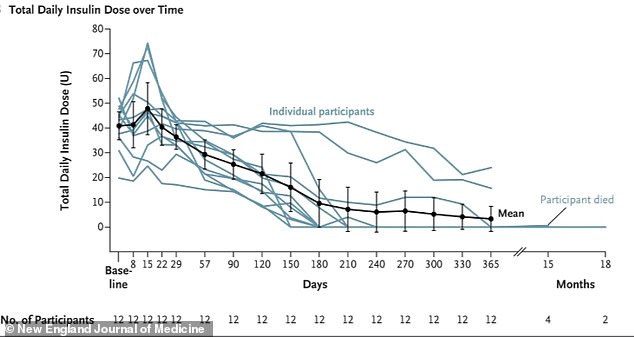
One year after being treated, 10 of the 12 patients who took the drug, called Zimislecel, no longer needed insulin, while the other two needed much smaller doses.

The groundbreaking therapy’s foundation uses stem cells that researchers manipulated to become
pancreatic islet cells
, tiny clusters of specialized cells scattered throughout the pancreas that produce hormones to regulate blood sugar.

The cells were injected into the patients, traveling through the liver, implanted there, and
began producing insulin
where their bodies had previously produced none.

Their blood sugar spikes were less severe after meals. Their insulin production also kept improving, and their time spent in a healthy glucose range went from about 50 percent at baseline to over 93 percent at one year.

The study’s participants are among the 30 percent of type 1 diabetes patients with a complication that makes it impossible for them to tell when their blood sugar is low or high, lacking the normal signs like shakiness or sweating.

All of the patients in the study had this subtype of type 1, known as hypoglycemic unawareness. The condition can also cause patients to pass out, have seizures, or even die.

Researchers behind the study believe their drug paves the way
toward a cure
for type 1 diabetes overall. The condition, which is due to a combination of genetics and environmental factors like childhood viral infections, affects roughly 1.6 million Americans.

Trevor Reichman, a study co-author and surgeon at University Health Network in Toronto, told
STAT
: ‘This study represents for the first time that biologic replacement can be administered to patients with type 1 diabetes in a single safe and effective procedure with minimal risk to the recipient.’

‘This study has the potential to get us one step closer to a ‘functional cure’ for patients with type 1 diabetes,’ Reichman added.

Researchers expect to apply for approval of this drug with the FDA within the next five years.

Patients had to have a history of hypoglycemic unawareness to participate in the study, causing seizures, coma, loss of consciousness, or hospital stays.

Once they started taking Zimislecel, made by Vertex Pharmaceuticals of Boston, the patients also had to take immune-suppressing drugs to prevent the body from attacking the foreign islet cells.

One study enrollee, Amanda Smith, 36, from London, told the
New York Times
that she jumped at the chance to join the groundbreaking trial.

Six months after receiving the infusion, she no longer needed insulin.

‘It’s like a whole new life,’ she said.

Traditionally, stem cells are isolated from the pancreas of a deceased organ donor. However, the cells in the latest research were grown in the lab rather than taken from cadavers, offering a scalable, renewable source of islet cells without having to rely on a limited supply of donors.

Type 1 is less common
than type 2 diabetes
, which affects 32 million Americans and typically comes on later in life due to a confluence of lifestyle factors and genes.

Without insulin, type 1 diabetics’ bodies have no way to regulate blood sugar, which can build up in the bloodstream and skyrocket.

The body starts breaking down fat for fuel, creating ketones, or acidic byproducts. A buildup of ketones in the blood can cause diabetic ketoacidosis, a condition that causes nausea, vomiting, rapid breathing, dehydration, and confusion.

Without proper treatment with insulin and fluids, diabetic ketoacidosis can cause a laundry list of potentially fatal effects, including brain swelling, kidney failure, cardiac arrest, and death.

This therapy is 25 years in the making, pioneered by the father of a baby who was diagnosed with type 1 diabetes, followed by his teen daughter. He pledged to find a cure for the disease.

Their findings were published in the
New England Journal of Medicine
.

The first patient to receive this therapy was Brian Sheton, who got it in 2021. He had been living with low blood sugar that often plunged him into a state of unconsciousness, even crashing his motorcycle into a wall at one point.

The infusion cured him, but Vertex said he died afterward due to dementia symptoms that were present before he was treated.

Stem cell therapy is the newest frontier in disease research, starting with niche conditions, such as hypoglycemic unawareness. Still, it has the potential to be scaled up to cover a broader umbrella of diseases.

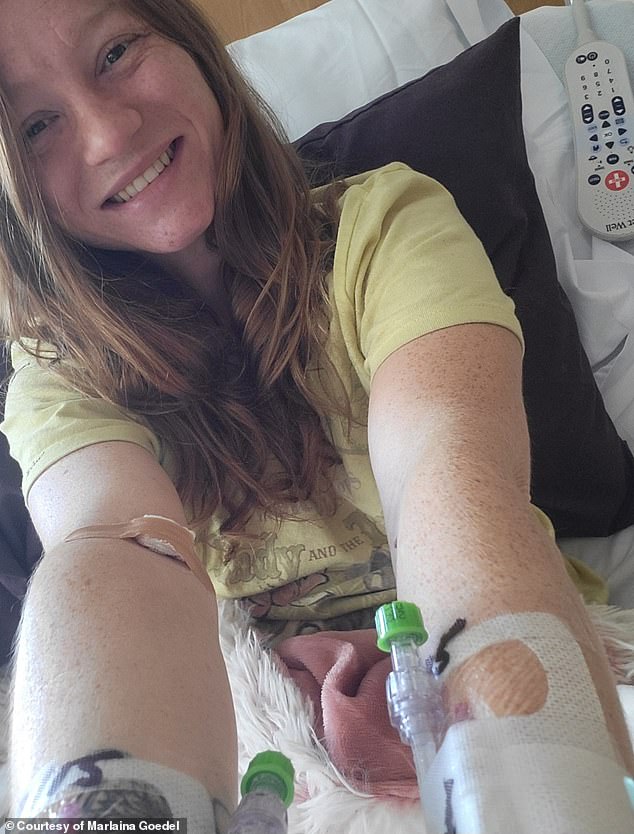
After 25 years of taking insulin shots, Illinois mom Marlaina Goedel finally said what she had longed to say for years:
‘I am cured.’


The 30-year-old was diagnosed with type 1 diabetes at five, and became one of a handful of people to have received an islet cell transplant.

Her blood sugar normalized within a month after the infusion, and she no longer needed insulin injections.

Now, she’s chasing long-postponed dreams: riding her horse, going back to school, and soaking in the sweetness of a life no longer dictated by blood sugar numbers.

‘We hope in the next five to 10 years that this therapy will have the potential to be given with minimal or zero immunosuppression, further minimizing the risk for patients long-term,’ Dr Reichman said, adding that more research is still needed on a larger population.

Read more

Ruto’s $20K Donation to Albert Ojwang’s Family Sparks Controversy Amid Money Theft Claims


  • Rumours have been circulating on social media accusing the president of not fulfilling his KSh 2 million promise

  • However, according to new information, the family did receive the money in cash but has never touched it

  • The news has not delighted many Kenyans who still believe Mzee Meshack Opiyo should have turned down the donation

Albert Ojwang’s family has denied reports that they are yer to receive the KSh 2 million donation from President Willaim Ruto.

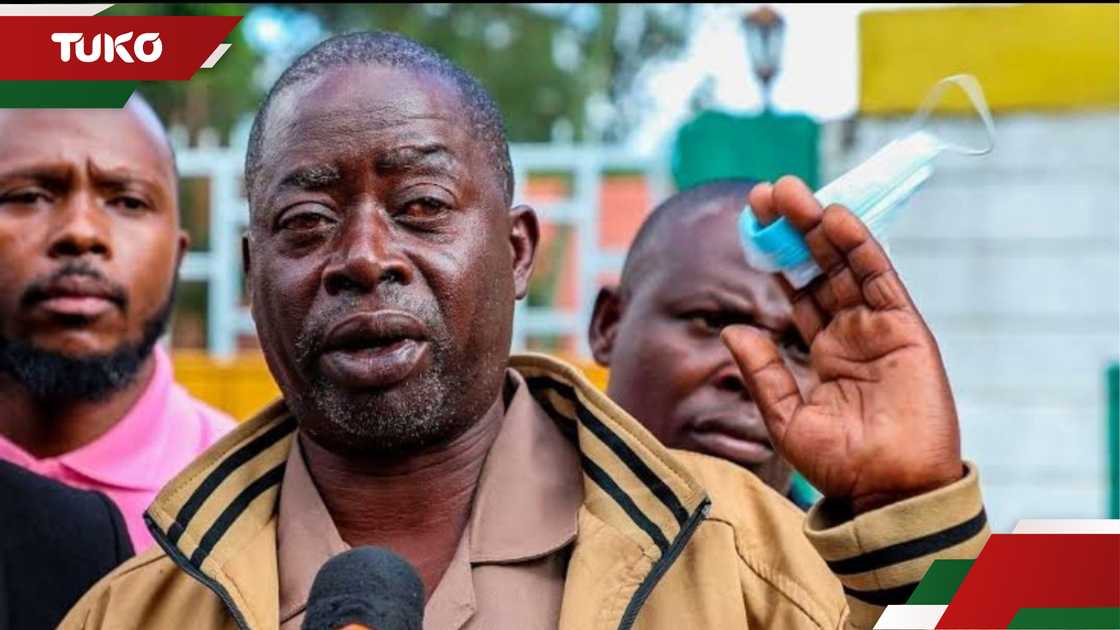
A few days ago, information went rife online, claiming that Ojwang’s family were yet to receive Ruto’s donation, with claims that Meshack Opiyo, Ojwang’s dad, urged the president to remember his pledge.

Ojwang’s uncle defends President Ruto

However, speaking to journalist on Tuesday, Ojwang’s uncle, Kenneth Ouma, denied the claims, noting the family did receive the amout.

Ouma said that the money was delivered in cash during the day they were visited by Homabay Governor Gladys Wanga, who came with the amount.

“It is in public domain that the president gave KSh 2 million. He sent (William Ruto) Hon. Gladys Wanga, who brought the money to the family,” he said.

Ouma noted that the whole amount was sent to the bank account and no one, including Meshack, touched even a cent of it.

He added that they called the Equity bank manager in the Oyugis branch, gave him the cash, and it is safe.

“The day it was brought, is the day it was sent to the official family bank account. Infact, I want to make it clear that the old man did not even touch a leaf of a note. The entire money as it was delivered by Hon Wanga, we called the Equiy bank manager Oyugis at home, all the money was given in cash and given to the bank manger, who I gave the account and can confirm to you that money is safe,” he said.


Just like from early reactions, the comment section did not have nice words to say about the family acceopting the money, which many saw as betrayal.

Here are some of the reactions:

irenemuendon said:

“The moment he thanked Ruto it was finished.”

mwambatalo_sambataba7_official said:

“Shauri yao…we went on the streets and he thanked Ruto rygym nkt.”

lakergal_raviellah said:

“So wako sawa hata kama walikua swindled they will be fine.”

kinjulius3 said:

“Money was given in cash na bank inakam aje ndani.”

stivohmaina said:

“he can never keep a promise.”

ictorkhodis claimed:

“Albert azikwe this people now are in business yet the guy will not get justice,watu wao wameshiba sasa.”

Ojwang’s family denies receiving KSh 10 million in donations

Earlier, the family of Albert Ojwang denied claims they received KSh 10 million in total donations through M-Pesa.

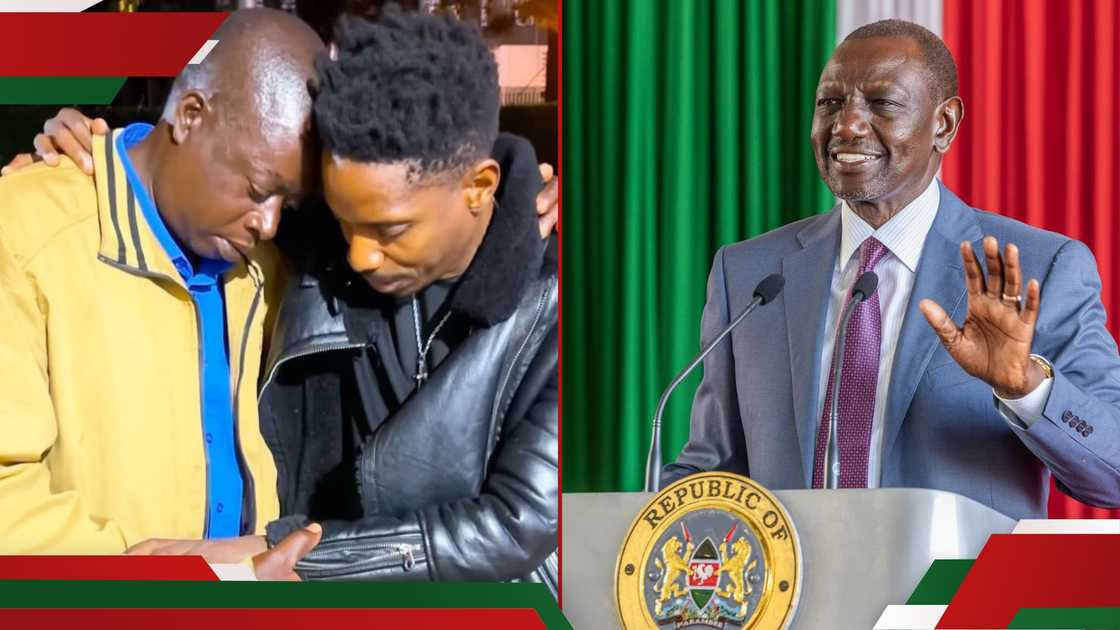
This was after community mobiliser Eric Omondi claimed that from his estimates, the family received about KSh 10 million.

According to Kenneth Ouma, the amount was about KSh 2.6 million and said what Eric did was assumed the total amount.

He noted that the amount could be around KSh 5.6 million in total when you add what the other politicians donated.

2027 Warning: Atiku-led ADA Poses Threat, Group Alerts Nigerians

The Oduwa Peoples Assembly (OPA) has issued a strong warning to Nigerians over the emergence of the All Democratic Alliance (ADA), a new political coalition reportedly spearheaded by former Vice President Atiku Abubakar.

In a statement by the group’s leader, Rechard Oltunji Kayode, expressed grave concern over the composition of the coalition, alleging that its leadership is made up of individuals whose records in public service have been tainted by allegations of corruption, poor governance, and self-interest.

Kayode said: “The leadership of the ADA is comprised of individuals who have long been associated with political opportunism, a trait that has severely undermined the trust of the Nigerian people in their leadership.

“Key figures such as Nasir El-Rufai and Rotimi Amaechi, among others, have been discredited through their actions and policies during their tenures in office. Their records reveal a troubling pattern of governance characterized by self-interest, corruption, and a blatant disregard for the welfare of the Nigerian populace.

“Nasir El-Rufai, the former Governor of Kaduna State, is emblematic of the kind of leadership that has brought our nation to its knees. His administration was marked by controversial policies and a lack of transparency, which left many citizens questioning his commitment to democratic principles.

“His involvement in the ADA raises serious concerns about the coalition’s intentions, as he has repeatedly demonstrated a willingness to prioritize political gain over the needs of the people he was elected to serve.

“Similarly, Rotimi Amaechi, the former Governor of Rivers State and Minister of Transportation, has a history of political maneuvering that has often favored his personal ambitions rather than the collective good. His leadership style has been criticized for fostering division and conflict rather than unity and progress.

“The OPA believes that the inclusion of such figures in the ADA is indicative of a coalition that is more interested in consolidating power than in addressing the pressing issues facing our nation.

“The desperation exhibited by the leadership of the ADA is palpable. In a bid to regain relevance and influence, these political opportunists are attempting to repackage themselves under a new banner, hoping that the electorate will forget their past misdeeds.

“However, the Nigerian people are not easily fooled. The electorate is increasingly aware of the need for genuine leadership that prioritizes accountability, integrity, and the common good.”

He urged Nigerians to resist being “swayed by the superficial allure” of the coalition and instead demand genuine leadership anchored on accountability, integrity, and national development.

He added, “The OPA urges all Nigerians to remain vigilant and critically assess the motives behind the formation of the All Democratic Alliance. This coalition should not be viewed as a beacon of hope for our democracy but rather as a continuation of the same old political games that have plagued our nation for decades.

“The ADA’s leadership is not equipped to offer the transformative change that Nigeria desperately needs; instead, it represents a regression to the very practices that have stifled our progress.

“It is our duty to demand better from our leaders. We must hold them accountable for their past actions and challenge the narratives that seek to mislead us. The Oduwa People’s Assembly calls upon all Nigerians to be discerning in their political choices and to support movements and individuals who demonstrate a true commitment to the principles of democracy, justice, and national development.

“The Oduwa People’s Assembly stands firm in its warning against the All Democratic Alliance. Let us not be swayed by the superficial allure of a new political coalition led by discredited figures. Instead, let us strive for a future where our leaders are genuinely invested in the welfare of our nation and its people.”

Provided by SyndiGate Media Inc. (
Syndigate.info
).