EUAN McCOLM: Civil Servants’ Benefits Spark Fury


  • Click here to visit the Scotland home page for the latest news and sport

The sense of entitlement is, at once, both infuriating and entirely unsurprising.

Pampered Scottish Government officials have grown accustomed, since the
Coronavirus
pandemic forced the temporary closure of offices, to working from home.

This emergency protocol was established for excellent reasons: in the months before a vaccine was created, Covid-19 presented a devastating threat to life. Of course it made sense for workers across the public and private sectors to carry out their duties far from the risk of infection.

But, thanks to the development of effective vaccines against the deadly virus, there is no longer any need for employees to stay away from their offices. Indeed, it is some years since such a measure was necessary, or even appropriate.

Yet, long after the threat from the virus was diminished, many Scottish Government civil servants continue to work from home. And many of them appear to have decided that’s the way things should stay.

For most Scots workers, going back to the office was not a matter of choice. It was, simply, a return to normality. But Scottish Government bureaucrats don’t reckon those rules apply to them.

Following an order that they should return to their offices for just two days a week, toys were ejected from prams across the country. How dare anyone expect these very important people to actually turn up at work?

An edict stating that 9,300 Scottish Government staff who have been allowed “hybrid” working arrangements since Covid should start spending two days a week in offices by autumn fuelled a backlash among mandarins, with some demanding special treatment simply for getting back behind their desks.
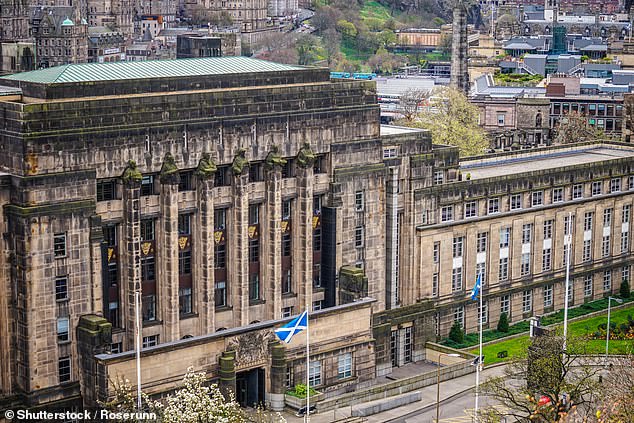
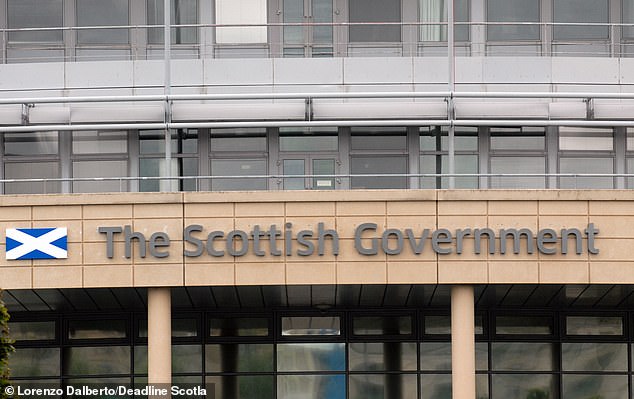
Using the government’s internal communications network, Saltire, staff bitterly complained about the hardship they would face if they had to actually turn up at the office to do the jobs for which they are so handsomely paid.

There were been demands for a swimming pool at the government’s Victoria Quay building to reopen, complaints that making staff come to work is unfair on their pets, and even questions over whether workers’ human rights are being breached by the order.

And, of course, there were calls for a pay rise, as if simply carrying out one’s contractual obligations represented a great personal sacrifice.

Senior managers within the Scottish Government want to cut back on the amount of time people work from home for the very good reason that they wish to boost productivity. It turns out that leaving entitled bureaucrats to their own devices is not good for efficiency.

I find it impossible to disagree with Conservative MSP Stephen Kerr’s view that those civil servants now complaining about the order to go to the office for a mere two days a week are “divorced from reality”.

Should you need persuading this is so, consider this comment from one civil servant: “Many have made big decisions based on balance — whether that be starting a family, getting a pet, getting rid of cars; down to things like starting a new fitness class, being able to take that longer lunchtime walk for their mental health or meet a friend after work because there is no commute. The prospect of that now being taken away is undoubtedly causing stress and anxiety.”

The wee lambs.

For workers across the private sector, refusal to come to work would be considered a matter of gross misconduct and instant dismissal would follow.

Click here to visit the Scotland home page for the latest news and sport

These same rules should apply to civil servants.

While the backlash from bureaucrats is enough to make the blood boil, who can say they find it surprising?

The culture of any organisation is set at the top and we have grown grimly accustomed to those who govern us acting as if they are entitled to special treatment.

We have watched as First Minister after First Minister has stood behind colleagues who – in the private sector – would have been sacked for incompetence. Why would a civil servant feel the need to perform their duties to any kind of acceptable standard when, for example, health secretary Neil Gray – of taking-a-limo-to-the-pub fame – remains in post? Why would a mandarin feel compelled to turn up to work when so many members of the Government act as if the standards by which the rest of us live and work are for the little people?

There would be something comical about highly-paid civil servants complaining about having to sit at their desks if Scotland’s public service were not in such a parlous state.

The SNP have made swingeing cuts to departmental budgets, stripping back services from social work to health to bin collections.

Meanwhile, ministers have retained a monomaniacal focus on the matter of Scottish independence. Not only have those in charge put their constitutional obsession before, for example, the need for a working NHS, they have diverted staff from vitally important work.

All of the hours spent planning for a second independence referendum that the Scottish Government has no right to run could – should – have been spent on the issues that truly matter to voters.

Amid the fear and anxiety created by the pandemic, there were some positives, not least the creation of a sense of community. As old social hierarchies crumbled, the feeling that we were all in it together was very real, indeed. The urge to play one’s part was strong and reassuringly widespread.

For most of us, life has got back to normal but for others, the need for friends and family to rally round endures.

There are those, of course, who live with the physical effects of Coronavirus long after infection. Others continue to pay a heavy financial cost.

The UK Government’s furlough scheme ensured wages were paid during the worst months of the pandemic but countless jobs lost – particularly in the retail and hospitality sectors – look unlikely ever to be replaced.

The “suffering” of a highly-paid mandarin, asked to come to work two days a week – without even having access to a swimming pool – doesn’t compare to that of someone whose career was destroyed by the pandemic, does it?

There is a case for the intervention of First Minister John Swinney, here.

I suggest he contacts those civil servants complaining about the return-to-the-office demand and makes them a generous offer: They can do as they are told or they can leave and find work more suited to their fragile temperaments.

There are plenty of hardworking Scots ready to step up.

Read more

Imo’s Debt Cut by Half Without Borrowing: Governor Uzodimma Announces

The Imo State Governor, Hope Uzodimma, has said his administration reduced the state’s debt profile by 60 percent, from N259bn in 2020 to N99bn, saying it is an indication of his government’s clear signal of financial management.

Uzodimma made the disclosure while addressing stakeholders at the State of Imo address at the State House of Assembly Owerri on Tuesday.

The governor who disclosed that he had no plans of borrowing money said the debt reduction was a clear signal of prudent financial management.

He disclosed that the internally generated revenue had increased by 500 per cent from ₦400 Million in 2020 to nearly ₦4 billion in 2025, noting that it had given the State the room to invest in infrastructure and services.

The governor said, “I am pleased to report that our administration has also reduced the state’s debt profile from ₦259 billion in 2020 to ₦99 billion in 2025.

“This reduction of 60% is a clear signal of our prudent financial management.

“In today’s Nigeria, where subnational governments are called to do more with less, Imo is showing that with vision, discipline, and reform, progress is possible”.

On the IGR, Uzodimma said “the impact is visible: our monthly Internally Generated Revenue (IGR) has grown from an average of ₦400 Million in 2020 to nearly ₦4 billion in 2025, an increase of about 500%.

” This performance gives us the fiscal breathing room to invest in infrastructure and services, even as federal allocations continue to look up”.

The governor disclosed that Imo State currently boasts of five higher institutions and that Tinubu had approved a take-off grant of over ₦30billion for the newly approved Federal University, Okigwe, saying it was an unprecedented milestone in the education journey of Imo State.

He said “It gives me great joy to announce that Imo State has a brand new federal university.

“Thanks to the magnanimity of President Bola Ahmed Tinubu, who not only signed the bill establishing the Federal University, Okigwe, into law but also approved a take-off grant of N39 billion.

“This is no small feat. With this development, Imo now proudly hosts five public universities, an unprecedented milestone in our educational journey.

“We give God all the glory.”

Uzodinma said the institutions are Imo State University, Owerri; K.O. Mbadiwe University, Ogboko; University of Agriculture and Environmental Sciences, Umuagwo; Imo State Polytechnic; and Ben Uwajumogu College of Education, Ihitte Uboma.

He disclosed that Imo State has a new transport chain known as the Imo Heartland Mass Transit Programme which will commence in the coming weeks aimed at “improving mobility, reducing travel costs, and creating jobs. Contracts have already been awarded, and contractors have been mobilised to the site.”

The transport scheme will have three bus terminals located at Egbu Road, Onitsha Road, and Naze Road, along with 256 bus stops strategically placed across the state, adding that the terminals or shelters are being constructed to world-class standards as part of a long-term plan to reshape urban and rural movement in Imo state.

Other achievements include the full automation of the civil service and its operations to stamp out fraud and ease service delivery, training and retraining of staff with modern-day work skills, prompt payment of salaries and pension, and uploading of backlog merited promotions as well as promotion of workers.

The governor said his administration had constructed more roads than all previous administrations since 1999 combined.

He said “Our commitment to infrastructure remains resolute.

“Today, Imo boasts of one of the most extensive and impactful road networks in Nigeria.

“Without sounding immodest, we have constructed more roads than all previous administrations since 1999, combined.

“To date, we have completed over 120 roads across the state.

“In the past 18 months alone, we delivered 37 brand new roads, an iconic edifice, the International Conference Center, and a befitting Government Housing Annex Orlu.

“We also have the Assumpta Flyover and the new Concorde-Hilton Hotel as landmark legacy projects”.

Some of the new roads listed were Toronto – Orji Road, Naze-Ogbosisi Road, Orlu – Nkume-Umuowa Road, Oru West LGA Road, Mgbidi-Omuma-Okporo Road, Amiri- Omuma Road, Ihialla -St Joseph_Eziachi Road, Okwudor-Awo omamma Road, Toronto-Ekemmegbuoha Road, Owerri-Mbaise-Umuahia road, IMSUTH road Orlu, Alaba International Market, Orlu–Akokwa–Uga Road (19.2km), and several others.

Other achievements listed by Uzodimma include health, sports, women’s affairs and social welfare, digital economy and e-governance, light up Imo project (electricity), housing, restoration of lands illegally diverted, amongst others.

The governor assured that Imo is safe as his administration had clamped down on criminals and those instigated by politicians, adding that with the support of the Federal Government and security agencies, the state had reclaimed its place as the hospitality capital in the southeast.

Uzodimma said,”As the Chief Security Officer of the state, I have never taken this responsibility lightly.

“You are all aware of the troubling period when our state was targeted by politically motivated insecurity, marked by banditry, violence, and lawlessness.

“But we did not fold our arms. We acted, resolutely and collaboratively.

“Through sustained partnership with the federal government and security agencies, we have steadily reclaimed the peace of Imo.

“I am pleased to report that the state capital, Owerri, has hosted several national and international conferences in the past year, without any incidents.

“That is no coincidence; rather it is the fruit of deliberate effort. Imo is returning to its rightful place as the hospitality capital of the South East.”

He, however, appealed to instigators of violence to stop, saying no personal ambition is worth the blood of the people, as he called on them to join hands with his government in building, not destroying the state.

Provided by SyndiGate Media Inc. (
Syndigate.info
).

Critical Analysis: Bawumia’s Case for Cedi Appreciation in 2025


By. Bernard TETTEH-DUMANYA (Dr)

In a recent public commentary, former Vice President Dr. Mahamudu Bawumia attributed the appreciation of the Ghanaian cedi in 2025 to policies implemented under the previous New Patriotic Party (NPP) administration.

He specifically highlighted the gold-for-oil initiative, the Bank of Ghana’s gold reserve accumulation, the global weakening of the U.S. dollar, and restrained public expenditure by the current NDC government as key drivers of the cedi’s resurgence.

While these remarks are positioned to credit past NPP policy interventions for current macroeconomic stability, a closer examination reveals several economic and logical inconsistencies.

One of the most striking contradictions lies in Dr. Bawumia’s shifting stance on the relationship between macroeconomic fundamentals and exchange rate dynamics. In 2014, while in opposition, he famously asserted that “if the fundamentals are weak, the exchange rate will expose you.” This statement became a cornerstone of his critique against the then NDC government during periods of cedi depreciation.

However, during his tenure as Vice President and Chair of the “solid” Economic Management Team, Dr. Bawumia adopted a markedly different position.

When the cedi came under pressure, he contended that currency depreciation does not necessarily signal weak fundamentals, often attributing the depreciation to external shocks beyond the government’s control.

This apparent inconsistency reflects a troubling tendency toward political opportunism rather than a principled, evidence-based approach to economic policy.

If one holds that weak fundamentals inherently lead to exchange rate vulnerabilities, then it logically follows that the cedi’s significant depreciation during his time in office should equally be viewed as a symptom of underlying structural weaknesses, not merely the result of external pressures.

Such contradictory narratives undermine public confidence and raise important questions about the coherence and integrity of Dr. Bawumia’s knowledge of Ghana’s economic discourse.

In 2025, Dr. Mahamudu Bawumia asserted that the Ghanaian cedi’s appreciation is primarily a result of the gold-for-oil policy, and the gold accumulation strategy implemented during the previous New Patriotic Party (NPP) administration.

While it is economically sound to recognize the importance of building foreign exchange reserves in safeguarding a currency against volatility, Dr. Bawumia’s attribution suffers from a

post hoc fallacy;

mistaking chronological succession for causation.

From an empirical standpoint, foreign reserves support currency stability most effectively when aligned with prudent and current fiscal and monetary policies.

The appreciation of a currency, particularly in open market economies, is more often a forward-looking signal reflecting investor confidence, market sentiment, and the credibility of ongoing economic management.

It is therefore logically inconsistent to credit 2025 exchange rate movements to policy decisions whose implementation had either concluded or lost momentum years earlier.

Although the Bank of Ghana’s gold purchases may have helped mitigate the balance-of-payments crisis in 2022–2023, the assertion that these past actions are the primary drivers of the cedi’s 2025 appreciation overlooks the complex and dynamic nature of currency markets.

Current macroeconomic outcomes are largely shaped by present-day governance, fiscal discipline, and credible monetary policy factors which investors actively monitor. Attributing ongoing developments to legacy policies, without acknowledging the influence of the current administration’s decisions, discounts the real and measurable efforts being made today by the NDC government.

More critically, Dr. Bawumia’s position reflects a troubling unwillingness to recognize the contributions of others. His dismissal of the current government’s role in fostering macroeconomic stability appears politically motivated and lacks analytical fairness.

One must ask: if the cedi were depreciating under the current administration, would he still attribute that to past policies? It is unlikely. This selective narrative implies that only positive developments stem from his tenure, while all negative trends are the fault of others’ a stance that is neither objective nor intellectually consistent.

It is important to acknowledge that while reserve accumulation is essential for long-term resilience, the cedi’s current appreciation is occurring under a new administration and is likely influenced by factors such as renewed investor confidence, ongoing fiscal consolidation, enhanced policy credibility under the IMF program, and improved monetary-fiscal coordination.

Indeed, the Bank of Ghana’s own Monetary Policy Report has noted that short-term exchange rate movements are more directly impacted by real-time fiscal discipline, external inflows, and policy credibilityrather than reserve buffers alone.

Dr. Bawumia has challenged the current administration to identify a single policy responsible for the recent appreciation of the cedi, attributing current macroeconomic improvements to the legacy of the previous NPP government.

However, this view overlooks the complexity of currency markets, which are influenced by ongoing fiscal policies, market expectations, and global trends. \xa0His argument also references the weakening of the U.S. dollar and compares Ghana to Zambia. While a softer dollar affects emerging markets broadly, it does not fully explain the cedi’s performance.

Ghana’s currency has historically been more volatile due to domestic factors like inflation, debt servicing, and trade imbalances.

Unlike Zambia, Ghana has not benefited equally from commodity exports or debt restructuring. Thus, the cedi’s gains are more credibly linked to internal policy credibility than external trends alone. Dr. Bawumia’s explanations also rely heavily on selective comparisons.

The Dollar Index (DXY) has seen cyclical changes, not a sustained decline, and other regional currencies like Nigeria’s naira have not mirrored the cedi’s performance. This suggests internal policy actions are more decisive.

Overemphasizing external factors ignores Ghana’s specific economic realities. It is dangerous for Dr Bawumia to continuously oversimplify such economic dynamics undermines public discourse and no wonder in 2017, he claims of having “arrested the cedi and given the keys to the IGP” serves as a caution against political sloganeering if he indeed wants to become president in Ghana.

Dr. Bawumia also argues that limited spending by the current administration—particularly its failure to pay Independent Power Producers (IPPs) and contractors has eased pressure on the cedi by reducing demand for foreign exchange.

While this may be true in the short run, it is a

dangerously flawed justification

for currency appreciation. Thus, claiming reduced expenditure as a virtue oversimplifies the relationship between public spending and currency health.

In summary, Dr. Bawumia’s attribution of the cedi’s recent appreciation to policies of the past government reflects a mix of

economic misinterpretation and political deflection


.

While some foundational efforts such as gold reserve accumulation may have contributed to earlier stability, the sustained appreciation of the cedi in 2025 is more likely the result of

ongoing fiscal discipline


,


IMF-backed reforms


,

and

reduced speculation due to increased policy credibility


.

Furthermore, relying on reduced spending or global dollar trends without acknowledging Ghana’s internal structural issues reveals a

narrow reading of complex macroeconomic dynamics

. For a more productive national economic discourse, future commentary must center on

evidence-based policy impact

, not retrospective credit-claiming.


>>>the writer


is a distinguished Ghanaian financial economist and consultant with nearly three decades of experience spanning academia, corporate finance, and agribusiness. He has held pivotal roles at institutions such as UBA Ghana, SIC Financial Services, Empretec Ghana, and the Swiss International Finance Group, reflecting his profound understanding of global finance. Renowned for pioneering efforts in risk management, compliance, and corporate strategy, Dr. Tetteh-Dumanya has significantly contributed to Ghana’s financial landscape.


His expertise encompasses venture capital, business and financial reengineering, and fundraising, playing a crucial role in the growth and development of numerous entities.


Driven by a commitment to capacity development, he has provided consultancy services to a diverse array of local and multinational organizations, including GIZ, AGRA, SNV, DANIDA, and USAID.


As the CEO of SGL Royal Kapita, he has introduced innovative investment services targeting Ghana’s agriculture sector, aiming to support farmers and agribusinesses in achieving financial stability and growth.


Beyond his professional endeavors, Dr. Tetteh-Dumanya is an influential columnist, offering incisive analyses on Ghana’s economic policies and advocating for strategic financial mechanisms to enhance the nation’s economic sovereignty. For inquiries, Dr.\xa0 Tetteh-Dumanya can be reached at:
mafioba@yahoo.com

Provided by SyndiGate Media Inc. (
Syndigate.info
).

Ruto’s $20K Donation to Albert Ojwang’s Family Sparks Controversy Amid Money Theft Claims


  • Rumours have been circulating on social media accusing the president of not fulfilling his KSh 2 million promise

  • However, according to new information, the family did receive the money in cash but has never touched it

  • The news has not delighted many Kenyans who still believe Mzee Meshack Opiyo should have turned down the donation

Albert Ojwang’s family has denied reports that they are yer to receive the KSh 2 million donation from President Willaim Ruto.

A few days ago, information went rife online, claiming that Ojwang’s family were yet to receive Ruto’s donation, with claims that Meshack Opiyo, Ojwang’s dad, urged the president to remember his pledge.

Ojwang’s uncle defends President Ruto

However, speaking to journalist on Tuesday, Ojwang’s uncle, Kenneth Ouma, denied the claims, noting the family did receive the amout.

Ouma said that the money was delivered in cash during the day they were visited by Homabay Governor Gladys Wanga, who came with the amount.

“It is in public domain that the president gave KSh 2 million. He sent (William Ruto) Hon. Gladys Wanga, who brought the money to the family,” he said.

Ouma noted that the whole amount was sent to the bank account and no one, including Meshack, touched even a cent of it.

He added that they called the Equity bank manager in the Oyugis branch, gave him the cash, and it is safe.

“The day it was brought, is the day it was sent to the official family bank account. Infact, I want to make it clear that the old man did not even touch a leaf of a note. The entire money as it was delivered by Hon Wanga, we called the Equiy bank manager Oyugis at home, all the money was given in cash and given to the bank manger, who I gave the account and can confirm to you that money is safe,” he said.


Just like from early reactions, the comment section did not have nice words to say about the family acceopting the money, which many saw as betrayal.

Here are some of the reactions:

irenemuendon said:

“The moment he thanked Ruto it was finished.”

mwambatalo_sambataba7_official said:

“Shauri yao…we went on the streets and he thanked Ruto rygym nkt.”

lakergal_raviellah said:

“So wako sawa hata kama walikua swindled they will be fine.”

kinjulius3 said:

“Money was given in cash na bank inakam aje ndani.”

stivohmaina said:

“he can never keep a promise.”

ictorkhodis claimed:

“Albert azikwe this people now are in business yet the guy will not get justice,watu wao wameshiba sasa.”

Ojwang’s family denies receiving KSh 10 million in donations

Earlier, the family of Albert Ojwang denied claims they received KSh 10 million in total donations through M-Pesa.

This was after community mobiliser Eric Omondi claimed that from his estimates, the family received about KSh 10 million.

According to Kenneth Ouma, the amount was about KSh 2.6 million and said what Eric did was assumed the total amount.

He noted that the amount could be around KSh 5.6 million in total when you add what the other politicians donated.

Behind Closed Doors: The Quiet Meetings Steering Governance Transformation


How strategic engagements with national institutions are laying the foundation for Africa’s next era of compliance


By


Tiffany A. ARCHER


, Esq.

At a pivotal moment for governance and risk management in Ghana, a series of high-level institutional engagements is setting the tone—not only for this week’s Executive Forum on Strategic Compliance™, but for the future of ethical leadership and institutional resilience across the region.

In the days leading up to the Forum, three of Ghana’s most respected institutions—the Institute of Directors–Ghana (IoD-Gh), the Ghana Bar Association, and the State Interests and Governance Authority (SIGA)—are holding closed-door sessions focused on strategic alignment, capacity building, and shared governance priorities.

These are not ceremonial meetings; they are working discussions rooted in national interest and a vision for stronger, values-driven institutions.


Institutional leadership at the forefront

At the invitation of these institutions, Tiffany A. Archer, Esq.—Founder of the Forum and President of Eunomia Risk Advisory, and a lecturer in law—is participating in the meetings as a knowledge partner, representing Eunomia’s commitment to strengthening governance capacity across high-growth markets.

A former Chief Compliance Officer and Fortune 200 legal executive with nearly two decades of global experience, Archer has advised multinational companies through U.S. DOJ and SEC investigations, overseen cross-border compliance strategies across Africa, Europe, and Latin America for multinational companies operating under U.S. and international regulatory regimes, and guided global companies through complex legal challenges, including court-appointed oversight programs—where an external expert monitors a company’s compliance with laws and ethical standards after major violations. Her expertise sits at the intersection of behavioral science, regulatory strategy, and ethical leadership.

Eunomia’s mission is to equip high-growth markets with the strategic insight and institutional tools needed to embed compliance, elevate governance, and manage risk with foresight.

Its work in Ghana reflects that mission in action—engaging with national institutions to advance African-led solutions to complex governance challenges and foster strategic clarity and cultural awareness in a rapidly evolving landscape.

  • At IoD-Gh, President Angela Carmen Appiah and CEO Dr. Alfred Braimah are exploring how board governance practices can be deepened to equip Ghana’s directors with the foresight needed to govern amid economic shifts, regulatory evolution, and digital transformation.
  • At SIGA, the Director-General and CEO, Professor Michael Kpessa-Whyte, along with Head of Governance, Risk and Compliance, Eric Albert Opoku, are leading a discussion on embedding performance-based governance into the oversight of state-owned enterprises—ensuring that SOEs are not just compliant, but positioned to deliver sustained public value.
  • At the Ghana Bar Association, President Efua Ghartey is facilitating dialogue on the legal profession’s role in shaping a culture of preventive compliance, advancing transparency and justice, and helping to close implementation gaps across sectors.

These engagements underscore a broader national imperative: that strong institutions and values-driven governance are not only good practice—they are essential building blocks for Ghana’s long-term development, investment confidence, and regional leadership.


Supporting capacity through knowledge

To support these efforts, Eunomia Risk Advisory is donating copies of Professor Douglas Boateng’s book, Practical Perspectives on Boardroom Governance, to each of the institutions.

Recently approved by the National Council for Curriculum and Assessment (NaCCA) as part of Ghana’s national education framework, the book has been praised for its clarity, accessibility, and real-world relevance.

It reinforces the critical role governance plays in national development—and offers practical tools to strengthen leadership and institutional performance across sectors.

Professor Boateng, one of Africa’s foremost authorities on corporate and supply chain governance, will also deliver the keynote address at the Forum. His work provides both policy-level frameworks and operational tools to enable institutions to govern with accountability, foresight, and long-term impact.


Strategic compliance as a development lever

As Ghana navigates an increasingly complex governance landscape—from regulatory shifts and ESG demands to digital risk and sanctions enforcement—strategic compliance is no longer a technical obligation. It is a lever for national progress.

The meetings this week are addressing:

  • How to expand board oversight into emerging non-financial risks, including ethics, culture, and cyber resilience;
  • How to institutionalize accountability within public enterprises as part of Ghana’s broader economic transformation;
  • How to elevate the legal profession as a force for transparency, enforcement integrity, and ethical growth.

These discussions reflect Eunomia Risk Advisory’s to helping institutions across the region turn policy into practice and aspiration into implementation—work that is now beginning in Ghana through these foundational engagements.

By grounding these conversations in Ghana’s institutional realities, these engagements reinforce a principle too often overlooked: that meaningful compliance begins within, and is sustained through local leadership and ownership.


Laying the groundwork for embedded change

While the Executive Forum on Strategic Compliance™—to be held on 26 June at the Kempinski Hotel—will bring together regional voices to explore AI governance, sanctions, financial crime, and behavioral science, these preliminary engagements ensure the Forum is not simply a convening—but a continuation of collaborative work already in motion. With limited seats remaining, registration is still open at
www.executiveforumcompliance.com
for those who wish to be part of this timely and impactful conversation.


A Ghanaian-led vision for ethical leadership

As the continent works toward the goals of Agenda 2063, Ghana’s leading institutions are demonstrating that good governance is not a foreign requirement—it is a national imperative, and a sovereign strength.

In the words of one senior leader involved in this week’s engagements, “Strategic compliance is not just about meeting requirements. It’s about building the kind of institutions that will carry this country forward.” Through these dialogues, Ghana is charting a path where ethics, risk intelligence, and institutional credibility form the foundation of competitive advantage—not only for today’s governance landscape, but for generations to come.

We hope to see you there.


>>>the writer is President and Founder of Eunomia Risk Advisor Inc, a specialized advisory firm advancing ethical governance, institutional resilience, and risk foresight across jurisdictions. She is also the Co-Chair of the Executive Forum on Strategic Compliance.

Provided by SyndiGate Media Inc. (
Syndigate.info
).

GTEC DG Explores Innovations at Family Health University

Director-General (DG) of the Ghana Tertiary Education Commission (GTEC), Professor Ahmed Jinapor Abdulai, has paid an informal visit to Family Health University (FHU), to observe the institution’s progress since receiving its Presidential Charter.

The visit was hosted by FHU’s Founder and Vice-Chancellor, Professor Enyonam Yao Kwawukume and Dr. Susu Bridget Kwawukume, Founder and Chief Medical Director of Family Health Hospital. They welcomed the GTEC Director-General, with gratitude, highlighting how meaningful the visit was to the institution, and expressed their heartfelt appreciation for GTEC’s unwavering support over the years.

Senior Members present at the meeting included the Pro-Vice Chancellor, Professor Philip Odonkor; the Registrar, Mrs. Rita Kaine; Dean of the Medical School, Dr. Sylvester Yaw Oppong; Acting Dean of the School of Nursing and Midwifery, Dr. Augustina Ofori-Asamoah; GEMP Coordinator, Professor Festus Adzaku; Director of Academics and Students Affairs, Dr. Emmanuel Labram; the immediate past Dean of the Medical School, Dr. Charles Fleischer-Djoleto; the Hospital Administrator, Madam Joana Agyare, and the Matron of the Hospital, Madam Veronica Amedo.

In his remarks, the GTEC Director-General commended the university’s “massive speed of development within a short time,” praising it as evidence of visionary leadership, a strong governing board, and a highly qualified faculty. He noted that FHU’s rapid growth and innovation affirmed its prestigious status as Ghana’s first private chartered university with a medical school.

Prof. Kwawukume also shed light on FHU’s contributions to global healthcare, particularly its hallmark bloodless fibroid surgical method, now gaining attention from global health bodies such as the World Health Organisation (WHO).

In the area of public health, Prof. Kwawukume reiterated FHU’s commitment to research, and pledged to eliminate cervical cancer in the Teshie-Nungua enclave within five years. He also expressed heartfelt condolences on the loss of Professor Timothy R.B. Johnson, a founding mentor whose role in shaping FHU’s success was invaluable. A newly named e-library on campus now bears his name in honour.

The visit also sparked critical discussions on policy. Dr. Sylvester Yaw Oppong, the Dean of the Medical School, made a passionate appeal for government support in the form of tax rebates for medical equipment, and also advocated for the extension of fee waivers for first-year students in private chartered universities, emphasising national equity in education.

Looking to the future, FHU announced its commitment to explore AI-assisted health technologies through local partnerships to enhance medical education and healthcare delivery.

The GTEC Director reaffirmed the Commission’s support for private science-based universities, noting that many private institutions are not profit-driven but face challenges that require national support.

The visit concluded with a campus tour, including stops at the ultra-modern emergency wards, dialysis unit, cadaver lodge, lecture halls, the university library, and the e-library. Prof. Abdulai also engaged with students, spoke briefly about the work of GTEC, and encouraged them to study diligently.

The visit marks a renewed chapter of collaboration between FHU and GTEC, reinforcing the role of visionary private institutions in Ghana’s tertiary and healthcare education space.

The post
GTEC DG Visits Family Health University
appeared first on
DailyGuide Network
.

Provided by SyndiGate Media Inc. (
Syndigate.info
).

2027 Warning: Atiku-led ADA Poses Threat, Group Alerts Nigerians

The Oduwa Peoples Assembly (OPA) has issued a strong warning to Nigerians over the emergence of the All Democratic Alliance (ADA), a new political coalition reportedly spearheaded by former Vice President Atiku Abubakar.

In a statement by the group’s leader, Rechard Oltunji Kayode, expressed grave concern over the composition of the coalition, alleging that its leadership is made up of individuals whose records in public service have been tainted by allegations of corruption, poor governance, and self-interest.

Kayode said: “The leadership of the ADA is comprised of individuals who have long been associated with political opportunism, a trait that has severely undermined the trust of the Nigerian people in their leadership.

“Key figures such as Nasir El-Rufai and Rotimi Amaechi, among others, have been discredited through their actions and policies during their tenures in office. Their records reveal a troubling pattern of governance characterized by self-interest, corruption, and a blatant disregard for the welfare of the Nigerian populace.

“Nasir El-Rufai, the former Governor of Kaduna State, is emblematic of the kind of leadership that has brought our nation to its knees. His administration was marked by controversial policies and a lack of transparency, which left many citizens questioning his commitment to democratic principles.

“His involvement in the ADA raises serious concerns about the coalition’s intentions, as he has repeatedly demonstrated a willingness to prioritize political gain over the needs of the people he was elected to serve.

“Similarly, Rotimi Amaechi, the former Governor of Rivers State and Minister of Transportation, has a history of political maneuvering that has often favored his personal ambitions rather than the collective good. His leadership style has been criticized for fostering division and conflict rather than unity and progress.

“The OPA believes that the inclusion of such figures in the ADA is indicative of a coalition that is more interested in consolidating power than in addressing the pressing issues facing our nation.

“The desperation exhibited by the leadership of the ADA is palpable. In a bid to regain relevance and influence, these political opportunists are attempting to repackage themselves under a new banner, hoping that the electorate will forget their past misdeeds.

“However, the Nigerian people are not easily fooled. The electorate is increasingly aware of the need for genuine leadership that prioritizes accountability, integrity, and the common good.”

He urged Nigerians to resist being “swayed by the superficial allure” of the coalition and instead demand genuine leadership anchored on accountability, integrity, and national development.

He added, “The OPA urges all Nigerians to remain vigilant and critically assess the motives behind the formation of the All Democratic Alliance. This coalition should not be viewed as a beacon of hope for our democracy but rather as a continuation of the same old political games that have plagued our nation for decades.

“The ADA’s leadership is not equipped to offer the transformative change that Nigeria desperately needs; instead, it represents a regression to the very practices that have stifled our progress.

“It is our duty to demand better from our leaders. We must hold them accountable for their past actions and challenge the narratives that seek to mislead us. The Oduwa People’s Assembly calls upon all Nigerians to be discerning in their political choices and to support movements and individuals who demonstrate a true commitment to the principles of democracy, justice, and national development.

“The Oduwa People’s Assembly stands firm in its warning against the All Democratic Alliance. Let us not be swayed by the superficial allure of a new political coalition led by discredited figures. Instead, let us strive for a future where our leaders are genuinely invested in the welfare of our nation and its people.”

Provided by SyndiGate Media Inc. (
Syndigate.info
).